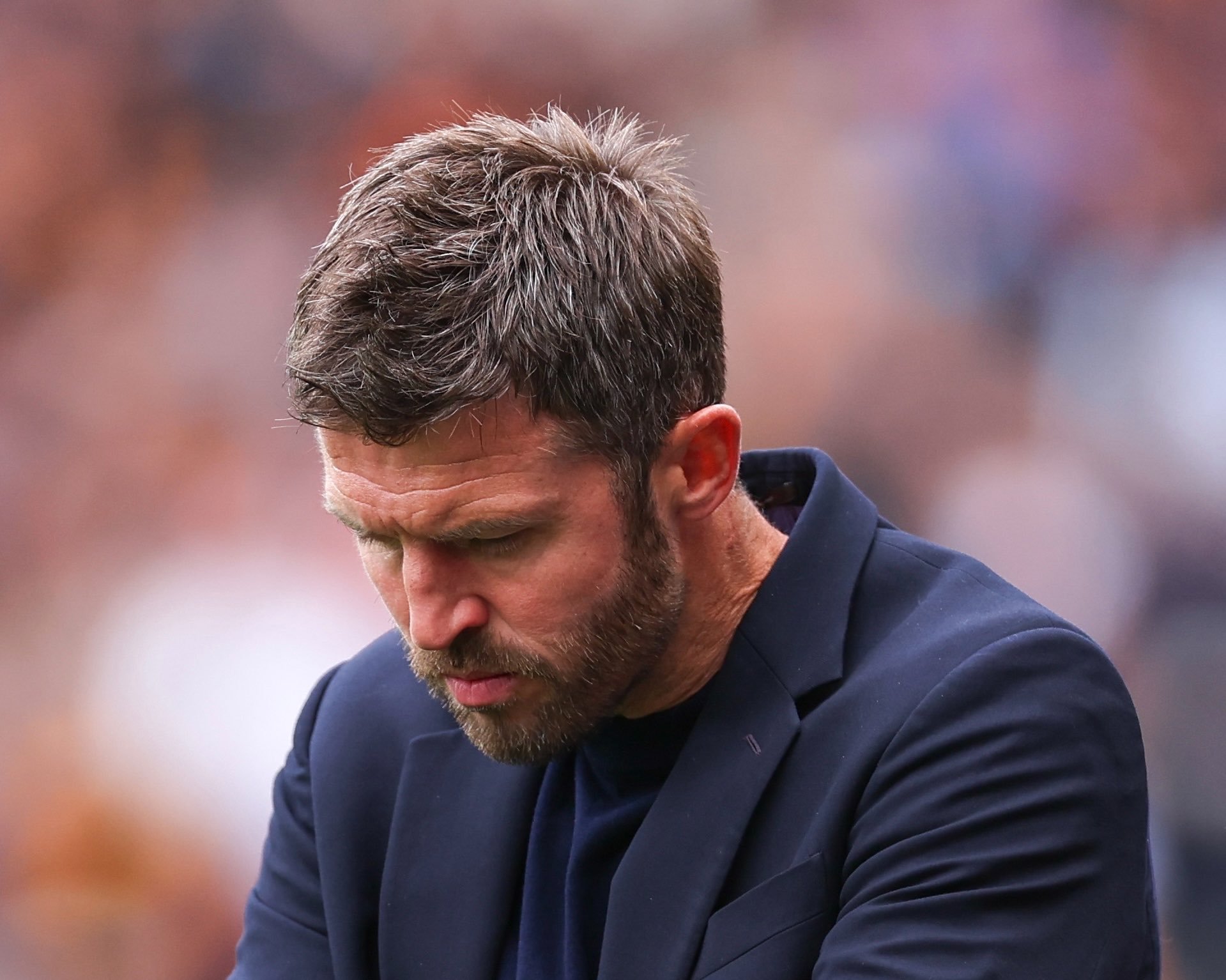
5 reasons why Michael Carrick could be close to the Manchester United exit

Michael Carrick’s Manchester United future is increasingly uncertain after seven winless games, growing player unrest, stalled progress and the emergence of high-profile managerial alternatives.
Manchester United have reached another uncomfortable crossroads, and Michael Carrick is beginning to look like a manager running out of time to convince the club’s hierarchy that he is the right man for the job.
The 4-1 Champions League defeat to Como on Wednesday has intensified scrutiny of a campaign that has unravelled far quicker than anyone at Old Trafford would have anticipated.
The numbers make uncomfortable reading. United have managed only two victories in 11 matches across all competitions this season and are now winless in seven consecutive games.
The latest humiliation in Italy was particularly damaging because it exposed familiar weaknesses in a side that appears short of confidence, defensive organisation and a clear identity.
Carrick, who earned a permanent appointment after an impressive interim spell last season, is now under pressure to explain why the progress that once made him an attractive candidate has seemingly disappeared.
Yet results alone may not determine his future. United’s decision-makers must also consider whether the players still believe in his methods, whether his managerial credentials were strong enough to justify the appointment in the first place and whether better alternatives are available.
With Julian Nagelsmann reportedly open to talks and other established or emerging coaches potentially entering the conversation, Carrick’s position looks increasingly vulnerable.
Here are five reasons why his time at Old Trafford could be approaching its end.
1. A disastrous run of results
Football management is ultimately judged by results, and Michael Carrick has very little to defend at the moment.
Two victories in 11 matches across all competitions, followed by seven consecutive games without a win, represent a dramatic collapse from the standards United established at the end of last season.
The 4-1 defeat to Como was particularly difficult to excuse. United conceded in the second minute, struggled to respond and found themselves four goals behind before Joshua Zirkzee scored a late consolation.
Como dictated the game for long periods, exposing United’s defensive weaknesses and inability to impose themselves against an opponent they would have expected to compete with.
The defeat left Carrick’s position in the balance ahead of Sunday’s Premier League meeting with Bournemouth.
That fixture could prove significant even as United’s hierarchy may be reluctant to make another managerial change so early in the season, particularly after handing Carrick a permanent contract in May.
However, patience becomes harder to justify when poor results are accompanied by performances that offer little evidence of improvement. Another damaging result would increase the pressure on the club’s leadership to reconsider its decision.
2. The progress of last season has disappeared
Michael Carrick did not arrive at the permanent job without earning a degree of credibility. His interim spell last season was impressive enough to convince United’s hierarchy that he could lead the club into a new era.
After replacing Ruben Amorim in January, Carrick won 11 of his 16 matches in charge, secured Champions League qualification and guided United to third place in the Premier League.
United also recorded the league’s highest points tally over the period of his tenure till the end of last season, strengthening the argument that he had restored belief and direction to a struggling team.
The problem is that the momentum has not carried into the new campaign. United look short of the organisation, intensity and confidence that characterised their revival under Carrick.
Their European performances have been especially concerning, with consecutive defeats to Atlético Madrid and Como exposing recurring defensive and tactical weaknesses.
A difficult start does not automatically mean a manager has lost his ability. But Carrick must demonstrate that he can adapt when opponents work out his methods.
The longer United remain stuck in the same cycle of poor performances, the less convincing the argument becomes that last season’s success provides sufficient reason to keep faith with him.
3. Growing public criticism threatens his authority
One of the most worrying developments for Carrick is the emergence of public disagreements involving senior players.
Poor results can be managed, but a breakdown in trust between a manager and his squad can be considerably more difficult to repair.
After the defeat to Atlético Madrid, defender Lisandro Martínez criticised the club’s hierarchy over the composition of the squad before subsequently apologising.
Now, team captain, Bruno Fernandes has questioned the coaching staff’s tactical approach following the Como humiliation.
Fernandes argued that United were not applying enough pressure on the ball and suggested they needed to be braver in pressing opponents higher up the pitch.
When asked whether the approach was a tactical issue, he responded: “That’s on the manager and staff to see, not me.”
The Portuguese midfielder’s comments placed Carrick under further scrutiny. The manager subsequently insisted that players must show the necessary effort and intensity regardless of the system being used.
Neither disagreement proves that Carrick has lost the dressing room as players can question decisions without withdrawing their support, and Fernandes’ criticism may reflect genuine frustration rather than a personal dispute.
Nevertheless, when senior figures publicly question the club’s direction in successive European matches, concerns about the manager’s authority become unavoidable.
Carrick needs his players to respond collectively on the pitch. If the criticism continues and results do not improve, United’s hierarchy may begin to wonder whether the relationship can be repaired.
4. His managerial reputation was not established enough
Michael Carrick’s appointment was always going to involve an element of risk. His status as a former United midfielder, combined with his successful interim spell, made him an attractive candidate but managing Manchester United permanently is a different proposition from taking charge during a period of short-term improvement.
Before returning to Old Trafford, Carrick had managed Middlesbrough for approximately two and a half years. He guided the Championship club into the play-offs during his first season and reached the League Cup semi-finals in 2024, but failed to secure promotion before leaving in 2025.
His previous experience was therefore promising rather than conclusive.
United’s decision to appoint him reflected the belief that his understanding of the club, coaching ability and work with the existing squad could translate into sustained success.
It was a gamble that appeared justified when he delivered Champions League qualification.
However, the current crisis raises the question of whether the club moved too quickly from an encouraging interim spell to a permanent appointment.
United are not simply looking for a coach capable of producing a strong run of results, but someone equipped to handle relentless scrutiny, manage superstars, build a consistent tactical identity and compete against Europe’s strongest teams.
Carrick can still prove he possesses those qualities, but the current circumstances has placed his credentials under a microscope, and his previous achievements may offer limited protection if the team continues to deteriorate.
5. The managerial market offers United alternatives
Perhaps the biggest threat to Michael Carrick is the possibility that Manchester United could find a more experienced or highly regarded alternative.
When a club of United’s stature enters a managerial crisis, the question is not merely whether its current coach deserves more time, but whether a better option is available.
Julian Nagelsmann is already emerging as a prominent name. The former Bayern Munich and Germany head coach is reportedly open to discussions if United decide to dismiss Carrick, according to reports.
Nagelsmann’s tactical reputation and experience at elite level would make him an attractive candidate, although no appointment or formal agreement has been confirmed.
Antonio Conte has also been linked with the vacancy, while other established managers could enter the conversation.
Didier Deschamps, who left the France national team after the 2026 World Cup, is another name worth considering if he wishes to return to club management.
His experience winning major honours with France and managing Juventus, Monaco and Olympic Marseille would give the Red Devils an accomplished alternative.
Fabian Hürzeler has also been mentioned as a potential candidate because of his work at Brighton.
However, reports on Thursday indicate that he is not interested in taking the United job if Carrick is dismissed, underlining that not every name on a speculative shortlist will be attainable.
Pep Guardiola’s name might also arise in wider speculation, but a move from Manchester City would be highly unrealistic without evidence that he intends to leave.
United must weigh up more than managerial CVs. Compensation, tactical compatibility, recruitment structures and the willingness of a candidate to take the job all matter.
Nagelsmann’s reported openness to talks, however, gives the club a potential avenue to explore should it decide a change is necessary.
For Carrick, the existence of credible alternatives makes the coming matches even more important. United’s hierarchy may be willing to give him an opportunity to turn things around, but it is unlikely to ignore the market if performances continue to deteriorate.
Bournemouth could be pivotal
Michael Carrick’s position is increasingly difficult to defend, but his dismissal should not be treated as a foregone conclusion.
United appointed him after a strong interim spell, handed him a contract running until 2028 and expected him to build on the progress achieved last season.
That progress has disappeared, the results are deteriorating and public criticism from senior players has added another layer to the crisis.
Those are serious warning signs for any manager, particularly at a club where expectations remain exceptionally high.
Sunday’s meeting with Bournemouth now carries added significance. A convincing performance and victory would not erase the damage inflicted by the defeats to Atlético Madrid and Como, but it could give Carrick some breathing space.
However, another poor display would intensify the argument that United need a fresh direction.
Ultimately, the decision will depend on whether the club believes Carrick can still deliver meaningful improvement. But for the present, the evidence is troubling, and with potential replacements attracting attention, his margin for error appears to be shrinking rapidly.