Lahm, Müller and Schweinsteiger and why Uli Hoeneß no longer sees them running Bayern Munich

Uli Hoeneß has admitted he no longer expects Bayern Munich legends Philipp Lahm, Thomas Müller and Bastian Schweinsteiger to take up senior leadership positions at the club, citing the demands and business expertise required for the roles.
Uli Hoeneß has admitted he no longer believes Bayern Munich will fulfil his long-held ambition of placing former club legends in senior leadership positions, pointing to the demands of modern football administration and the reluctance of retired players to commit to such responsibilities.
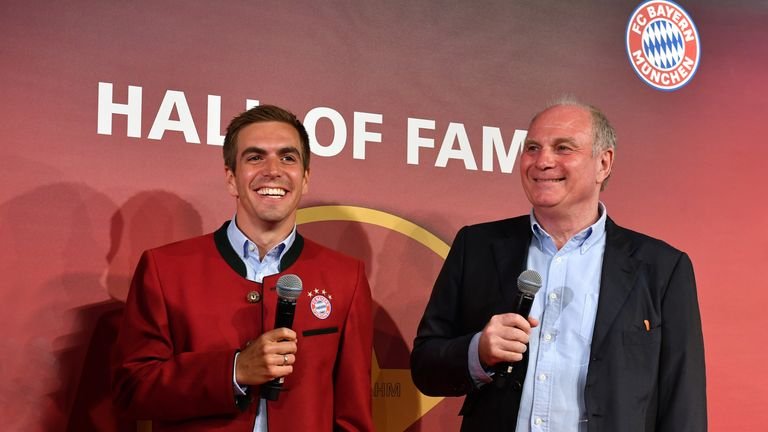
The Bayern honorary president had hoped to see former players such as Philipp Lahm, Thomas Müller and Bastian Schweinsteiger eventually take up influential roles at the Allianz Arena, following in the footsteps of figures who helped shape the club’s successful past.
However, Hoeneß now considers the idea increasingly unrealistic, arguing that the financial security enjoyed by modern footballers has changed their attitude towards working after retirement.
Speaking about his fading ambition, the 74-year-old explained that the responsibilities attached to running Bayern require a level of commitment that former players may no longer be willing to offer.
“That is a wonderful idea, but one that cannot be realised at the moment. Because the players a) have a lot of money and b) therefore, when push comes to shove, they probably don’t want to work six days a week, twelve hours a day,” Hoeneß said.
Schweinsteiger and Müller turned down opportunities
Uli Hoeneß’s comments follow unsuccessful attempts to bring some of Bayern’s most recognisable former players back into the club’s structure.
He previously revealed that he approached Schweinsteiger about taking up a team-support role at Bayern. However, the 2014 World Cup winner reportedly questioned whether the position required his daily presence at the club’s training facilities.
After Hoeneß confirmed that it did, Schweinsteiger declined the opportunity.
Müller, meanwhile, was offered a different route into the club’s management structure. Hoeneß proposed financing a year-long tour of major sporting organisations, allowing the former Bayern forward to gain administrative experience before potentially joining the club’s leadership.
However, Müller was not ready to make that commitment and instead continued his playing career with Vancouver Whitecaps in Major League Soccer.
Lahm had also been considered for a leadership position following his retirement in 2017, but disagreements over the nature of the proposed role prevented an agreement.
Dreesen remains the preferred option
Beyond their footballing experience, Hoeneß believes that running Bayern requires considerable commercial understanding, financial knowledge and an established business network.
He insisted that appointing someone simply because of their legendary status would serve little purpose if they were not prepared to meet the demands of the position.
“If you have to convince someone, it doesn’t make sense anyway. We will continue to wait for someone who meets all the requirements,” he added.
According to Hoeneß, the ideal candidate must understand the business side of football, including financial concepts such as depreciation, rather than relying solely on their experience as a professional player.
For now, he is satisfied with the work of current chief executive Jan-Christian Dreesen, who took over following Oliver Kahn’s departure in May 2023.
While the prospect of seeing Bayern legends return to influential positions remains an attractive idea, Hoeneß appears increasingly resigned to the reality that footballing greatness does not necessarily translate into executive ambition.