Adriana Caballero case raises questions over treatment of Women in Football Media

Adriana Caballero’s experience with a proposed dress code at Sportivo Ameliano has triggered debate over women’s treatment in football media, prompting the Paraguayan club to withdraw the restrictions and apologise.
A proposed dress code at Paraguayan club Sportivo Ameliano has sparked debate over how women are treated in football journalism, after photographer Adriana Caballero found herself at the centre of a dispute over her appearance while working.
A controversy over what female sports photographers should wear to work has erupted in Paraguay after Sportivo Ameliano circulated a dress code for media professionals covering their upcoming match against Olimpia.
The incident has drawn attention to the challenges women can face in football coverage, where their professional work can sometimes become overshadowed by scrutiny of their appearance.
The dispute began on Wednesday, October 21, when Sportivo Ameliano’s press department issued guidelines for journalists, photographers and other media workers accredited to cover the club’s Paraguayan Primera División Clausura fixture against Olimpia, scheduled for Sunday, October 25.
The proposed rules required media personnel to dress in a “sport-elegant” style, prohibiting shorts for both men and women. The restrictions placed on women went further, banning low-cut blouses and clothing that exposed the abdomen while limiting leggings to black or dark blue.
The club justified the requirements by pointing to its family-oriented environment, explaining that children from its football academy attend home matches alongside their parents.
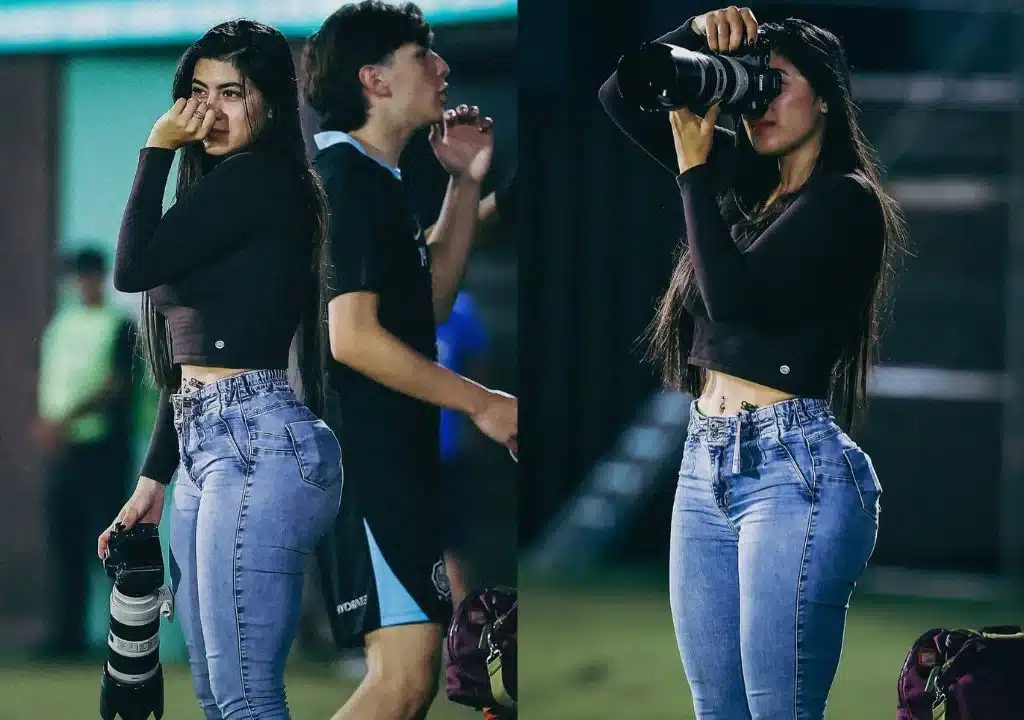
However, the announcement quickly attracted criticism, particularly after reports linked the controversy to sports photographer Adriana Caballero, whose appearance in a photograph shared on social media had reportedly prompted a complaint to the media outlet that published it.
Adriana Caballero speaks out
Adriana Caballero subsequently addressed the controversy, explaining that she was surprised by the scale of the response to her appearance while working.
She questioned why a photograph of her had become the subject of a complaint and defended her right to choose clothing that allowed her to feel comfortable while carrying out her professional responsibilities.
“I always dress according to my comfort. When I read the statement, it shocked me, but I said: well, sooner or later it was going to happen. This could harm my colleagues,” she said.
Her concern extended beyond her own experience. Caballero warned that the incident could have consequences for other photographers, particularly women who work in an environment where their appearance may attract attention separate from their professional output.
The episode also raised questions about how complaints concerning female media workers are handled and whether individual concerns should lead to restrictions affecting an entire group of accredited journalists.
How the controversy escalated
The proposed dress code was circulated ahead of the Olimpia fixture, with the press department presenting the guidelines as necessary to maintain a professional atmosphere and protect the club’s institutional image.
But the restrictions quickly became a source of disagreement among media workers, with criticism focusing on the extent to which a football club should dictate what accredited journalists and photographers wear while performing their duties.
The backlash prompted Sportivo Ameliano president Héctor Melgarejo to intervene publicly.
Speaking to Paraguayan sports radio programme Fútbol a lo Grande, Melgarejo said he had not authorised the dress code and distanced the club’s leadership from the decision.
He expressed his displeasure over the situation, apologised to the affected media professionals and stressed that the proposed rules did not represent the club’s position.
Melgarejo also made clear that journalists, photographers and camera operators could attend matches in their usual working attire.
Club withdraws the rules
Sportivo Ameliano subsequently issued an official clarification confirming that the dress code had not been authorised and did not reflect the institution’s position.
The club acknowledged the work of journalists, photographers, camera operators and other media professionals, adding that they should feel comfortable and respected while covering its matches.
It also apologised for the confusion and any discomfort caused by the announcement.
The institution clarified that media workers would only be expected to present valid accreditation and maintain the usual standards of courtesy and respect when accessing its facilities.
The statement effectively brought an end to the proposed restrictions, although it did not erase the wider debate triggered by the episode.
A wider conversation about women in football
For Caballero, the controversy has become about more than a disputed clothing policy. It has raised questions about the treatment of women working in football media and the extent to which their appearance can become a subject of professional scrutiny.
Sports photographers operate in demanding environments, often moving around the pitch to capture decisive moments while working under tight deadlines. Their work requires technical skill, concentration and an understanding of the game, regardless of what they wear.
The incident in Paraguay has highlighted the distinction between legitimate professional standards and rules that risk making personal appearance a condition of doing the job.
It has also demonstrated the importance of clear communication within sporting institutions. In this case, the club’s president publicly rejected a measure circulated by its own press department, forcing the organisation to clarify its position after the controversy had already spread.
Sportivo Ameliano’s withdrawal of the proposed dress code resolved the immediate dispute, but the questions raised by Caballero’s experience remain relevant to the wider football media industry.
As women continue to work across sports photography, reporting and broadcasting, the incident serves as a reminder that professional contributions should remain central to how media workers are regarded, rather than allowing debates about their appearance to overshadow their work.