LaLiga introduces historic rule with Referee press conference after each game

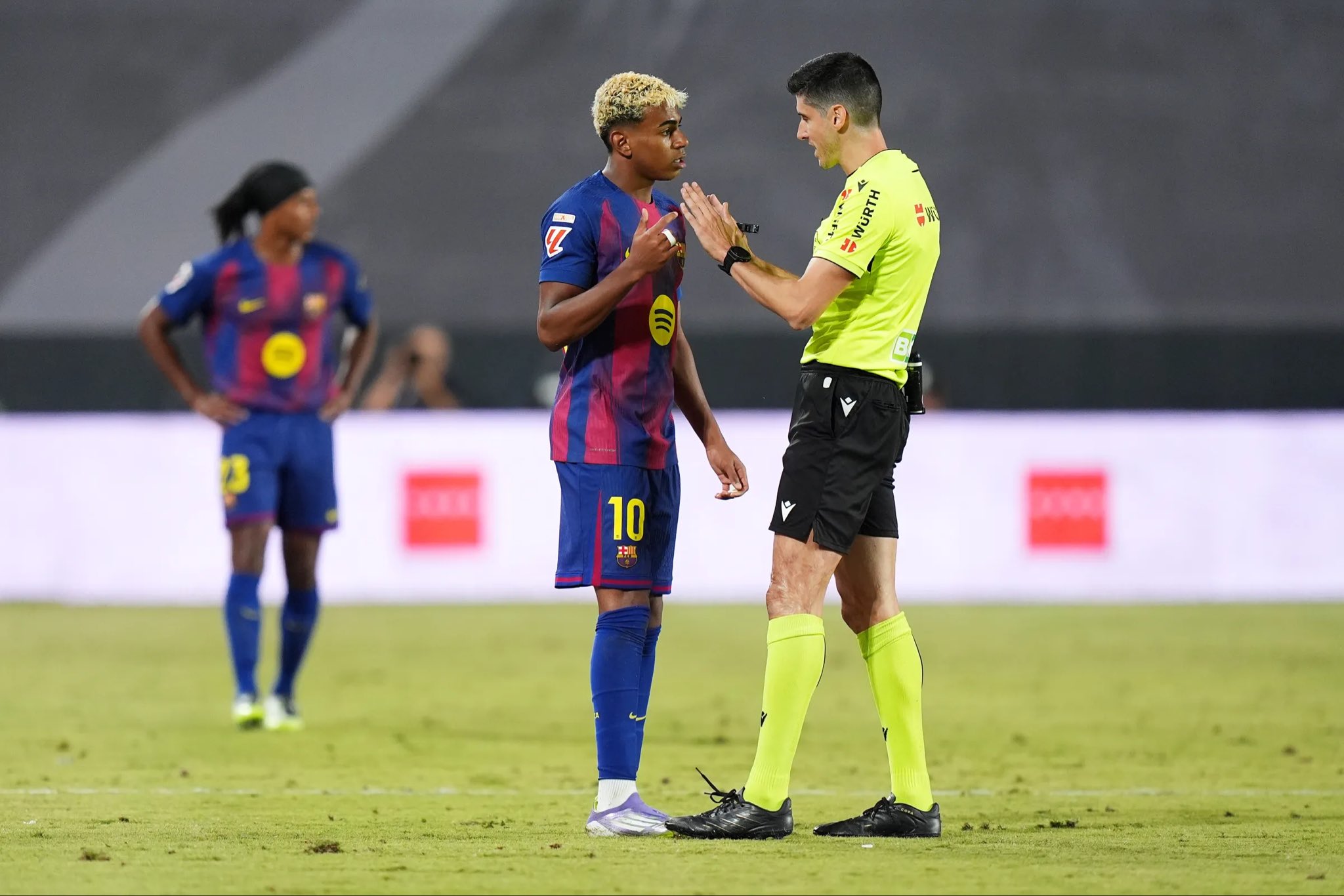
LaLiga will make Spanish football history this weekend by allowing referees to give post-match television interviews, offering supporters greater insight into controversial decisions.
Spanish football is preparing for a significant change in its approach to refereeing transparency, with LaLiga officials set to face television interviews immediately after matches for the first time in the country’s history.
The initiative, which begins this weekend, represents an expansion of a programme introduced at the start of the 2026/27 season, when referees began giving pre-match interviews to broadcasters holding the competition’s television rights.
New era of refereeing transparency
Under the new arrangement, match officials will have the opportunity to address the media after the final whistle, potentially providing explanations for important decisions and controversial incidents.
The move follows discussions involving LaLiga, the Technical Committee of Referees (CTA), the Spanish Football Federation and the referees’ association.
According to reports from Spain, DAZN and Movistar+, the competition’s television rights holders, will each be allowed to interview one referee per matchday. This means two officials could speak to broadcasters after matches every weekend.
The agreement also reportedly includes an audiovisual bonus of €500,000 to be distributed among referees in recognition of their participation in the initiative.
Athletic-Sociedad derby to debut initiative
The new arrangement will make its debut during the 11th round of LaLiga fixtures, with the Basque derby between Athletic Club and Real Sociedad among the selected encounters.
The two sides are scheduled to meet at San Mamés on Sunday, November 1, with the match official expected to speak to DAZN after the contest.
Another early opportunity will come from Saturday’s meeting between Levante and Atletico Madrid, which is expected to feature an interview through Movistar+.
The development could give supporters a better understanding of refereeing decisions, particularly in matches involving contentious penalties, red cards and VAR interventions.
However, the initiative’s success will ultimately depend on how openly officials engage with difficult questions and whether their explanations help restore confidence in Spanish refereeing.
For a competition frequently surrounded by arguments over officiating, LaLiga’s latest move could mark an important step towards greater accountability.