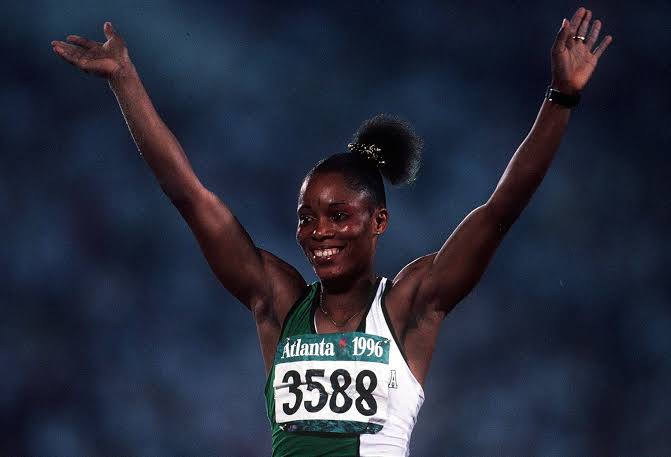
Nigeria Olympic pioneer Chioma Ajunwa lifetime ban lifted after 24 years at 55

Nigeria’s Atlanta 1996 Olympic gold medallist Chioma Ajunwa is free to return to athletics after the Athletics Integrity Unit overturned her lifetime suspension, ending a 24-year disciplinary ordeal.
Former Nigerian Olympic champion Chioma Ajunwa has been cleared to return to athletics after the Athletics Integrity Unit (AIU) lifted the lifetime ban imposed on her in 2002.
The decision, which takes immediate effect, brings an end to a suspension that kept one of Nigeria’s most celebrated sporting figures away from competitive athletics for more than two decades.
Ajunwa, who made history at the 1996 Olympic Games in Atlanta, was sanctioned by the International Association of Athletics Federations (IAAF), now known as World Athletics, after testing positive for nandrolone in 2002.
The punishment was imposed under the anti-doping regulations applicable at the time, with the violation classified as her second offence following an earlier suspension.
However, more than 24 years after the decision, the former long jumper approached the AIU on August 28, 2026, requesting a review of her case.
AIU invokes more lenient anti-doping regulations
In reviewing the case, the AIU applied the legal principle of lex mitior, which allows an individual to benefit from more lenient regulations introduced after an offence was committed.
The integrity body concluded that, under the revised anti-doping framework, Ajunwa’s 2002 violation should have been assessed as a first offence rather than attracting the lifetime suspension imposed under the previous rules.
An AIU memorandum dated November 18, 2026, confirmed the reduction of her period of ineligibility and restored her eligibility with immediate effect.
The decision also brought renewed attention to how her original case was handled. Ajunwa maintained that the Athletics Federation of Nigeria (AFN) failed to follow the appropriate procedures when she attempted to challenge the punishment.
She also recalled that fellow athlete Rosa Collins travelled to Monaco in an effort to secure another hearing but was directed to take the matter through the Nigerian federation.
A fresh chapter for Nigeria’s Olympic pioneer
At 55, Ajunwa remains one of the most influential figures in Nigerian sporting history, having delivered a landmark achievement at the 1996 Atlanta Olympics.
She won the women’s long jump gold medal with a leap of 7.12 metres, becoming the first Nigerian to win an Olympic gold medal in athletics and the first Black African woman to claim Olympic gold in a field event.
Her sporting journey was not limited to athletics. Before concentrating on track and field, she represented Nigeria at the inaugural FIFA Women’s World Cup in 1991, making her one of the few athletes to have competed for the country at both the football tournament and the Olympic Games.
Although the lifetime suspension abruptly interrupted her athletics career, the latest ruling removes the restriction that prevented her from returning to the sport.
Ajunwa has welcomed the decision, expressing gratitude that the controversy surrounding her career has finally been resolved.
She has also urged Nigerian sports administrators to improve their understanding of technical regulations and anti-doping procedures to prevent other athletes from experiencing similar situations.
The AIU’s decision represents a significant personal victory for the Olympic champion, restoring her eligibility after 24 years and giving her the freedom to participate in athletics again, should she choose to do so.
But at 55, Ajunwa will have to settle for behind the scenes roles.