Rejecting Max Dowman’s red card appeal highlights why England can’t produce a Lamine Yamal-level talent

The FA’s decision to reject Arsenal’s appeal over Max Dowman’s red card raises an uncomfortable question about how can English football hope to produce a Lamine Yamal when it fails to protect its brightest young talents.
The incident between the Arsenal youngster and Fleetwood Town’s Harrison Neal also highlights a wider problem with English football’s approach to young talents, where physicality often takes precedence over protection and technical development.
English football has never been short of young talent. From Michael Owen and Wayne Rooney to Jack Wilshere, Bukayo Saka and Jude Bellingham, the country has consistently produced players capable of making an impression at the highest level.
Yet there remains a difficult question about how England develops and protects its most gifted teenagers, particularly whether the Premier League’s obsession with physicality sometimes comes at the expense of technical development.
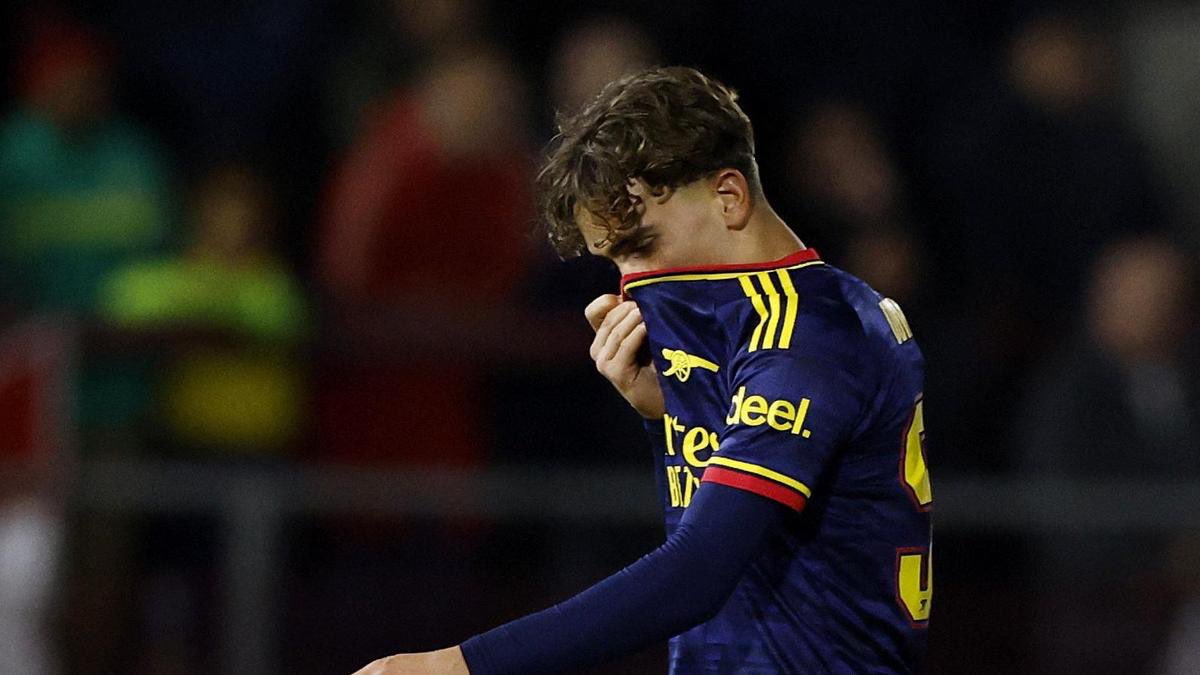
The rejection of Arsenal’s appeal against Max Dowman’s red card has brought that debate into headlines. The 16-year-old was dismissed during Arsenal’s Carabao Cup defeat to Fleetwood after reacting to a heavy challenge from behind, one that could have left him with a broken foot.
Rather than concentrating solely on his response, however, the circumstances that led to it deserve closer examination.
There is a difference between holding a player accountable for misconduct and ensuring that opponents are equally accountable for dangerous challenges. Yet, by upholding Dowman’s dismissal, the Football Association missed an opportunity to send a stronger message about protecting young footballers.
The tackle, the reaction and the responsibility
The incident occurred in the 85th minute of Arsenal’s Carabao Cup fourth-round tie against Fleetwood Town.
Max Dowman was involved in a challenge with Fleetwood midfielder Harrison Neal, who made a heavy tackle from behind. Although Neal appeared to make contact with the ball, the force of the challenge left the Arsenal youngster in discomfort.
Dowman subsequently kicked out at Neal, making contact and triggering a confrontation. Referee Michael Salisbury showed the teenager a straight red card for violent conduct, while Neal escaped punishment for the initial challenge.
There is no argument that Dowman should be free to retaliate whenever an opponent makes a heavy challenge. However, refereeing is also about recognising dangerous challenges and preventing situations from escalating.
By failing to penalise Neal’s challenge, the referee allowed the initial incident to go unpunished before taking decisive action against the teenager’s response.
While the referee can be forgiven as no VAR replays at the stage of the Carabao Cup, the FA subsequently rejecting Arsenal’s appeal against the dismissal and three-match suspension is alarming, especially with the reaction considerably lenient.
Arteta’s frustration exposes the bigger problem
Mikel Arteta was understandably disappointed by the outcome of the fialed appeal. Speaking ahead of Arsenal’s Premier League meeting with Liverpool, the Spaniard questioned the proportionality of the punishment and highlighted the potential seriousness of the challenge.
“Very disappointed to be fair. Especially with the reckless tackle he receives and then his reaction is minimal in relation to the action. It could have been really bad. We are lucky today he doesn’t have a broken foot. That’s clear.”
Arteta’s concern goes beyond defending his player. A 16-year-old could have suffered a serious injury, yet the challenge that preceded his reaction attracted no corresponding disciplinary action.
The FA may not consciously encourage violent conduct, but decisions like this risk sending the wrong message. When a dangerous challenge goes unpunished while the player’s reaction earns a three-match suspension, the balance of accountability becomes difficult to defend.
Physicality has cost England special talents
Max Dowman was lucky to get away without a serious injury, yet the incident brings back memories of footballers whose careers were repeatedly disrupted by injuries in the English league.
Jack Wilshere remains one of the clearest examples. Having made his Arsenal debut at 16, the midfielder quickly established himself as one of England’s most exciting prospects.
However, persistent injuries, including a serious ankle problem that kept him out for 15 months, prevented him from enjoying the consistency his talent deserved. He eventually retired at 30 without fulfilling the expectations surrounding him.
Michael Owen also experienced persistent muscular injuries that gradually affected the explosive pace that made him such a dangerous striker.
Edouardo da Silva, Abou Diaby, Dean Ashton, Owen Hargreaves, Ledley King, and more have also been victim of the same.
These careers cannot be blamed exclusively on Premier League physicality, but they demonstrate how injuries can derail exceptional talent.
Why England cannot produce Lamine Yamal-level talent
The comparison with Lamine Yamal is particularly revealing. The Barcelona forward turned 19 in July and has already accumulated more than 200 senior appearances for Barcelona and Spain combined.
His development reflects a willingness to trust exceptional teenagers with significant responsibility at the highest level. In England, however, clubs can be more cautious about exposing young players to the physical demands of the Premier League.
Max Dowman is among the country’s brightest prospects, but incidents like this reinforce the difficulties facing technically gifted youngsters. Clubs must consider not only their development but also how to protect them from unnecessary physical punishment.
That could mean fewer appearances, carefully managed minutes and prolonged periods away from the first team. It could also encourage talented youngsters to consider opportunities abroad, where they might receive more regular football without facing the same concerns.
The FA’s rejection of Arsenal’s appeal explains why England may not produce a Lamine Yamal-level talent, because the style of play makes one a target for opponents, and the English Referees offer no protection, as much as players enjoy in other leagues.
England wants its teenagers to become world-class footballers, yet do not invest in protecting their development by enforcing a consistent disciplinary rules. Of course physicality is part of football, but should not become an excuse for reckless challenges.
Max Dowman must learn from his reaction, but referees and the English FA must also recognise their responsibility to protect young players. Otherwise, England risks producing extraordinary talents without creating the conditions necessary for them to fulfil their potential.