The 2026 FIFA World Cup Team of the Tournament

Checkout the 2026 FIFA World Cup team of the tournament as compiled by our team following an eventful maiden edition of the expanded format in North America.
The dust has finally settled on the 2026 FIFA World Cup, and after eight weeks of goals, drama, and a final that will be talked about for years, it’s time to pick the best team of the tournament produced.
Choosing eleven names from a field this strong was never going to be easy, but a handful of players separated themselves through consistency, big-game influence, and numbers that simply couldn’t be ignored.
This year’s tournament will be remembered as one of the most attacking in recent memory as it finished as the highest-scoring World Cup edition since 1958, and that offensive spectacle shapes much of this selection, even as defensive solidity still had its say in deciding the biggest prizes.
Spain’s march to the trophy dominates this list, and rightly so. A side that conceded just once in eight matches while playing some of the most fluid, possession-heavy football, naturally dominates our picks, from the goalkeeper right through central midfield.
But this XI isn’t only about the champions. Argentina, France, Brazil, and England all produced individuals whose performances deserved recognition, even in years their nations fell short of the trophy itself.
A World Cup Best XI has always been about individual brilliance as much as collective success, and this year’s list reflects that balance. Set out in a 4-4-2 formation, here is our team’s pick among stars that best captured the story of the 2026 World Cup, position by position.
2026 FIFA World Cup Team of the Tournament
Goalkeeper: Unai Simón (Spain)
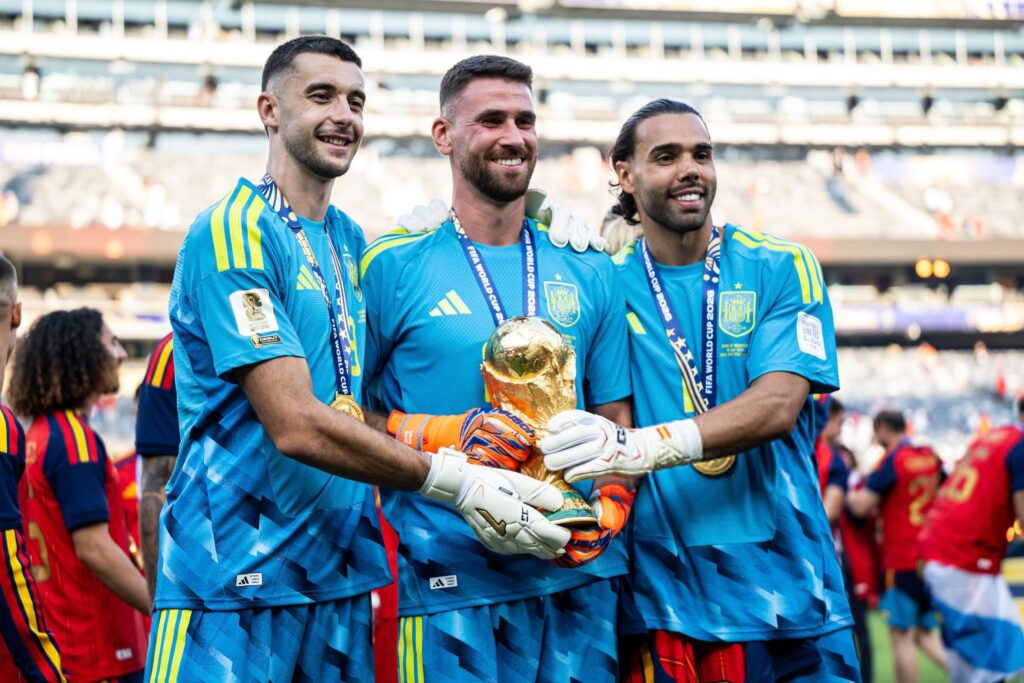
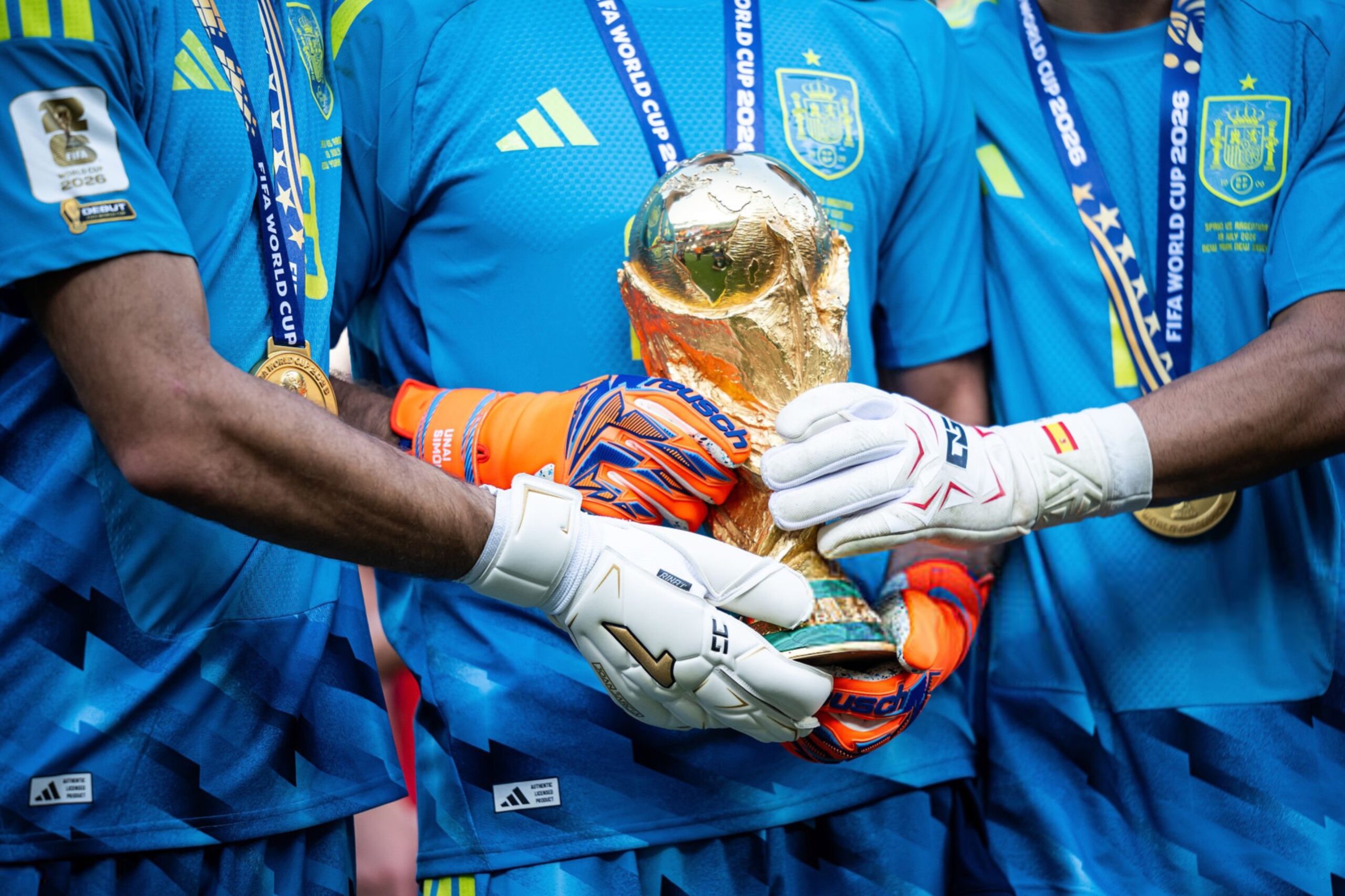
Spain’s number one was the foundation everything else was built on. Unai Simón kept seven clean sheets and conceded just a single goal across all eight of Spain’s matches, a record that earned him the tournament’s Golden Glove.
Simón shattered the all-time shutout streak record by going a massive 650+ consecutive minutes without conceding a goal at the tournament, breaking the previous record held by Italy’s Walter Zenga.
The Athletic Club man barely had to make a save in the final itself, but that says as much about his positioning and Spain’s defensive structure as it does about Argentina’s lack of a cutting edge in front of goal.
Left-back: Marc Cucurella (Spain)
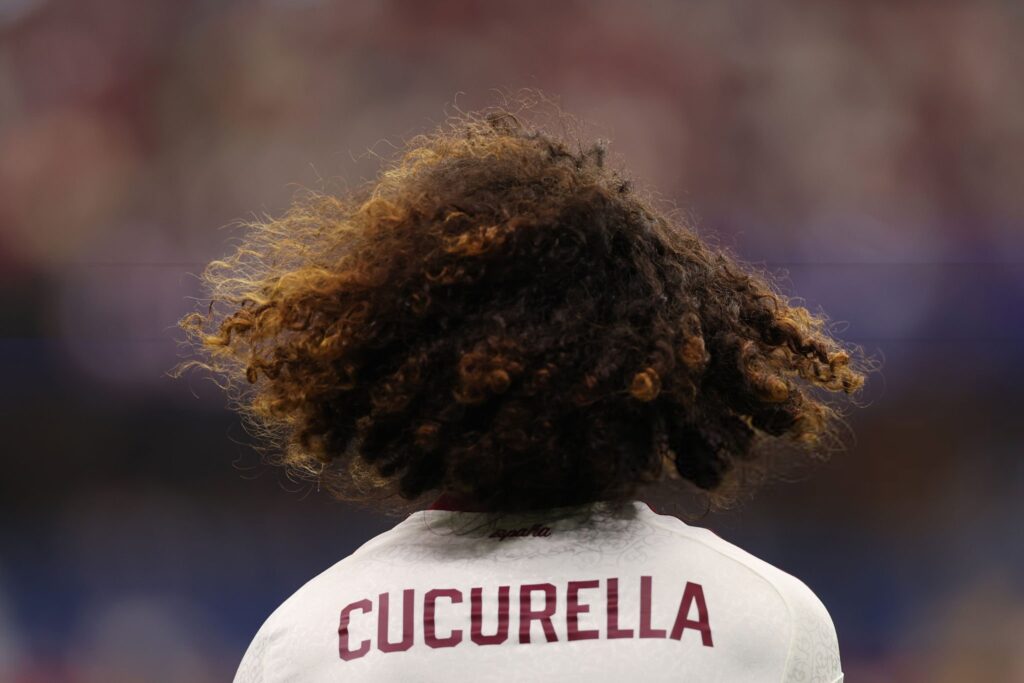
Marc Cucurella’s tireless workrate down Spain’s left flank gave Luis de la Fuente’s side balance between attack and defence all tournament long. He barely got beaten by his men despite coming up against the best attackers.
He rarely put a foot wrong defensively, and his willingness to bomb forward and support the wide areas played a quiet but essential role in Spain’s near-flawless defensive record.
Centre-back: Pau Cubarsí (Spain)
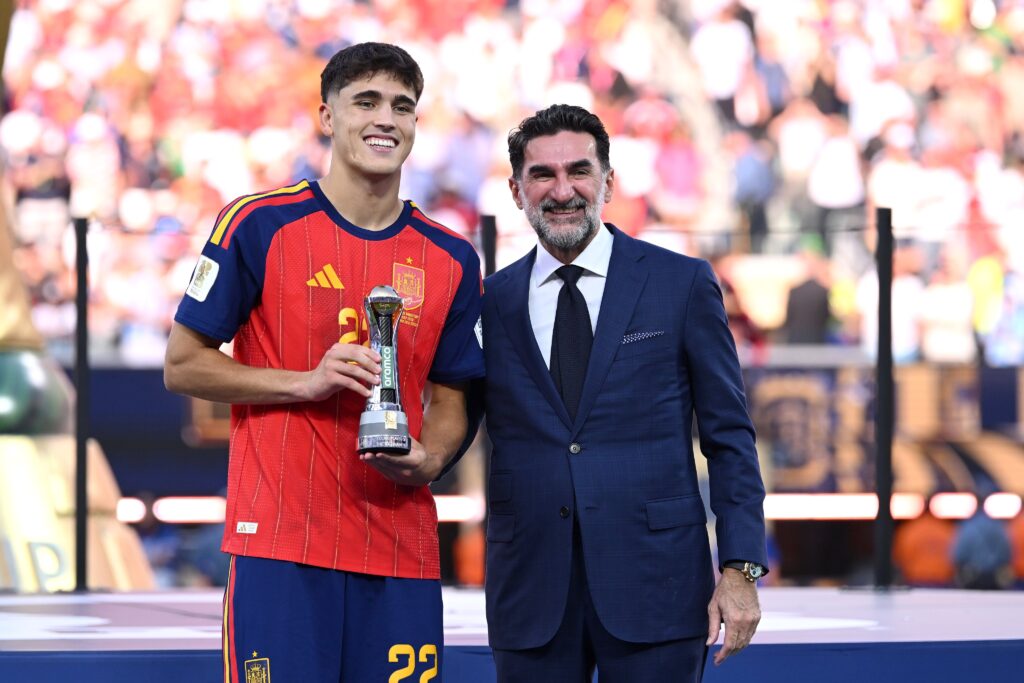
Still a teenager, Pau Cubarsí was one of the standout defenders of the entire tournament, ranking second for both touches and passes with nearly 700, and over 670 respectively, behind only Rodri on both.
His composure on the ball and reading of the game well beyond his years made him a near-ever-present at the heart of Spain’s defence, and he was honoured among FIFA’s official tournament award winners with the Young Best Player prize.
Centre-back: Dayot Upamecano (France)
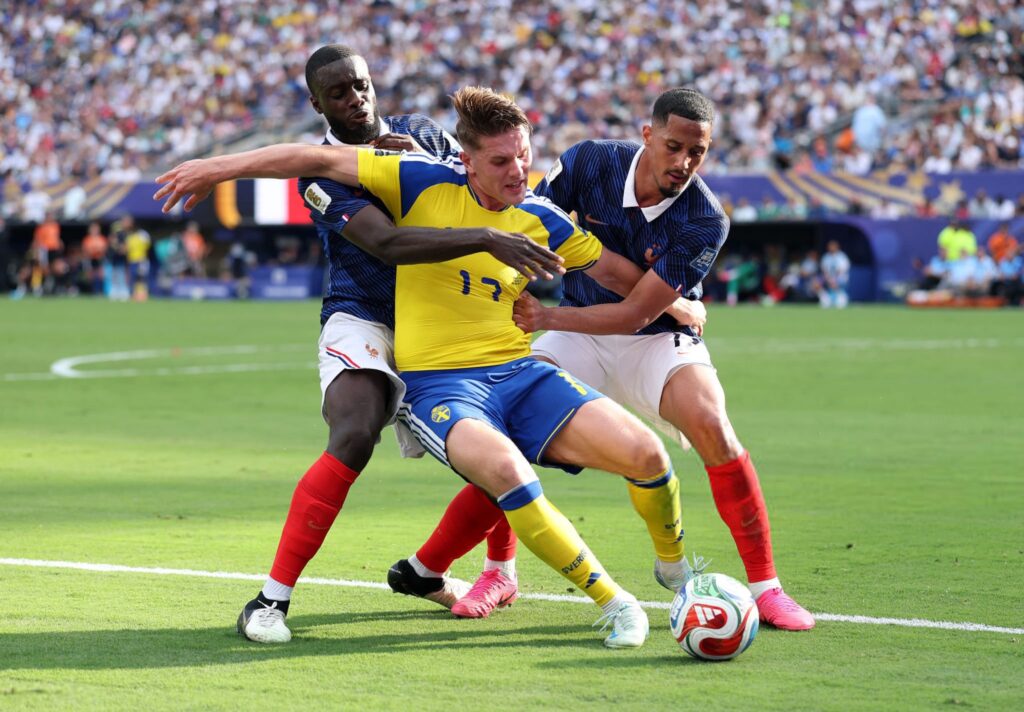
Even in defeat, Dayot Upamecano’s performances stood out. Alongside William Saliba, he marshalled a France defence that reached the semi-finals, using his pace and physicality to repeatedly snuff out dangers.
France also barely concede goals with him in the pitch, but due to rotation reasons and to give him needed rests following a hectic club campaign, Didier Deschamps was forced to play others, who made the defence very leaky.
Without the unfortunate injury to his other half William Saliba in the semi-finals, maybe Upamecano would have been lifting the World Cup trophy in the final on Sunday. Nevertheless, he was class in North America.
Right-back: Pedro Porro (Spain)
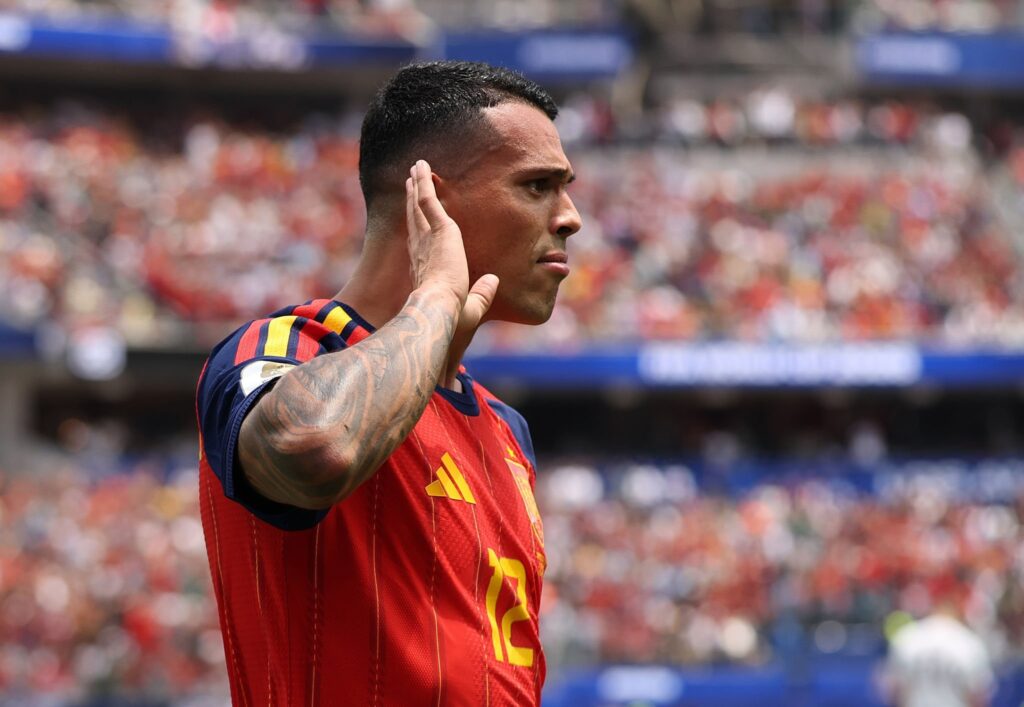
Just like Marc Cucurella on the opposite flank, Pedro Porro gave Spain width and directness from the right, consistently getting forward to support the attack while staying disciplined enough not to compromise a backline that shipped only one goal all tournament.
His partnership with the midfield in front of him was central to Spain’s control of games. Porro also scored two important knockout goals, including one that helped put France to sleep in the semi-final.
Left-midfield: Vinícius Júnior (Brazil)
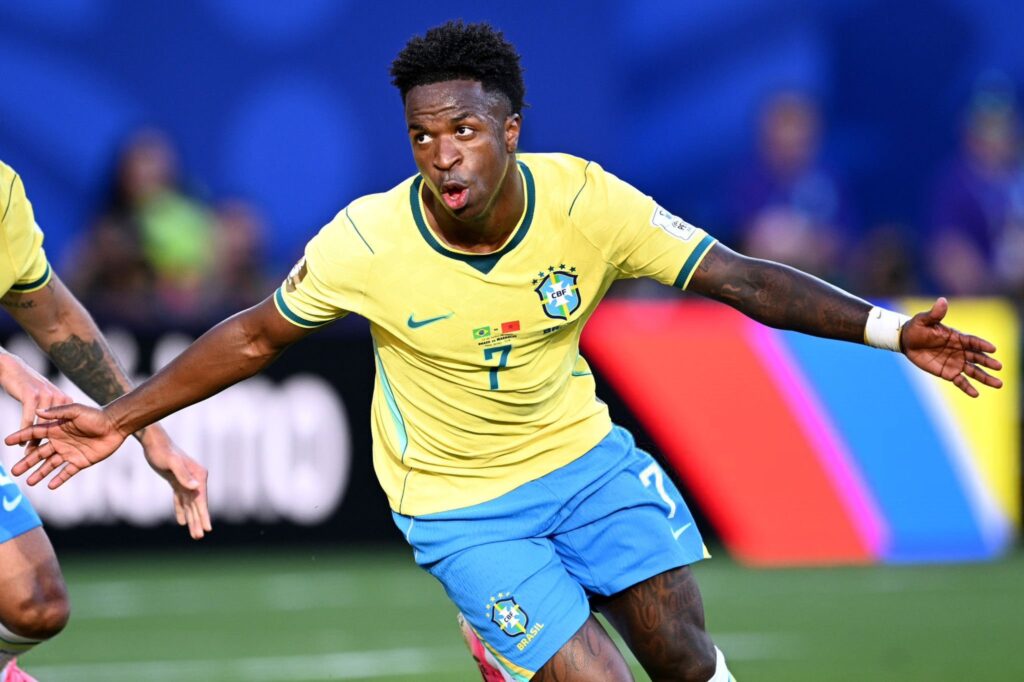
Until their round of 16 exit, Vinícius Junior carried Brazil’s attacking threat with pace, direct running, and a knack for beating defenders one-on-one that few in the tournament could match.
His dribbling and chance creation numbers placed him among the competition’s most productive wide players. He impressed in all five games, producing four goals and one assist for a team that lacked the talent to really challenge for glory.
He was one of the best players of the tournament before Brazil’s defeat to Norway. Nevertheless, no left-winger really match his impact for the whole tournament, even those with better numbers and placement.
Defensive midfield: Rodri (Spain)
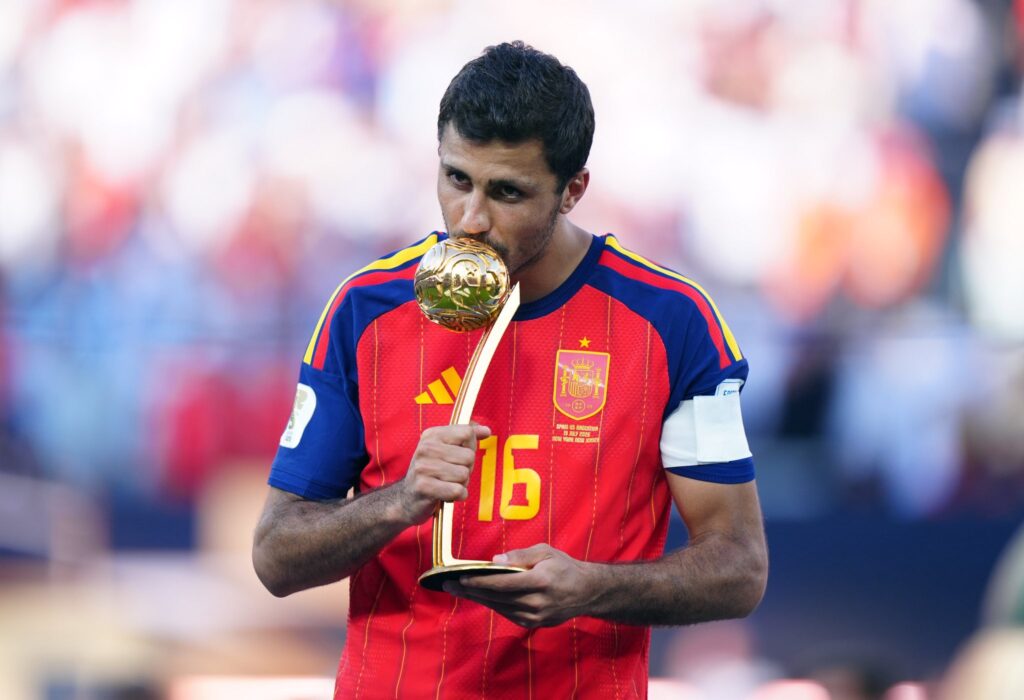
The Golden Ball winner and the heartbeat of this entire team, Rodri completed more passes than any player at a single World Cup on record, topped Spain’s tournament charts for touches, tackles, and duels won, and did it all without picking up a single card.
He ensured Spain’s dominant displays, which became the foundation of their conquest in North America. He led the way for important midfield metrics and even without the inflating goals and assists, his brilliance couldn’t go unnoticed.
In the final, he completed 101 of 105 passes and won four out of every five duels, the calm centre around which Spain’s title run was built.
Attacking midfield: Jude Bellingham (England)
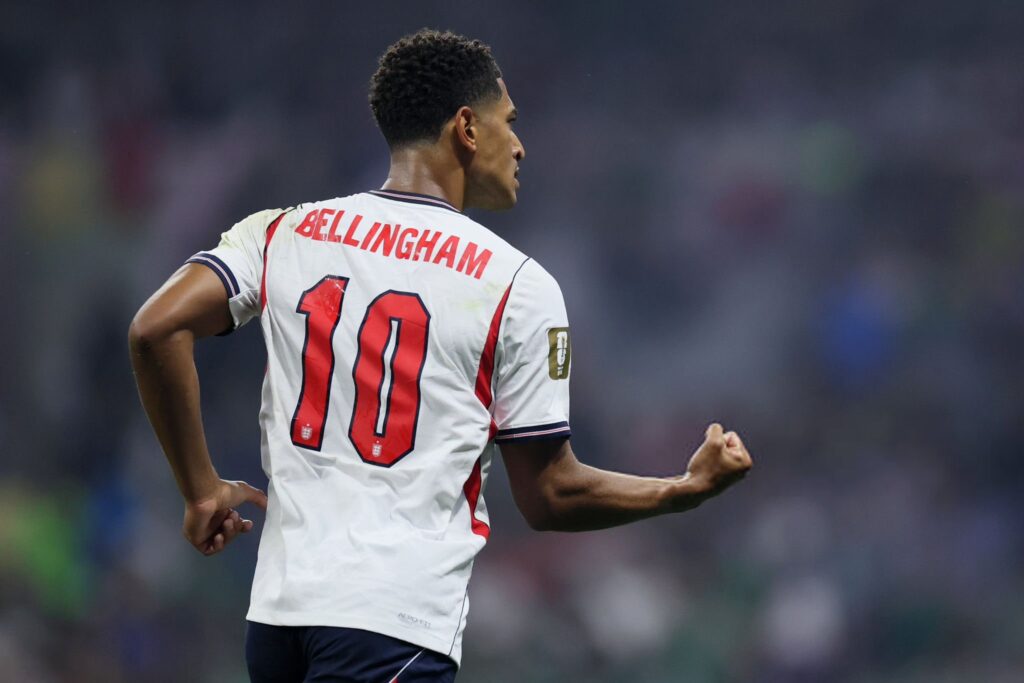
Jude Bellingham inspired England to their best World Cup finish on foreign soil, setting a new personal and national benchmark with seven assists at a single tournament, a new England record.
His combination of creativity and late runs into the box made him the driving force behind England’s bronze medal campaign, while he also set a new record for most World Cup goals by a midfielder in a single edition.
In the bronze match, the 23-year-old came on for the final 12 minutes against a team of France’s magnitude, scored a brilliant individual goal and completed all five dribble attempts, setting another record in the process.
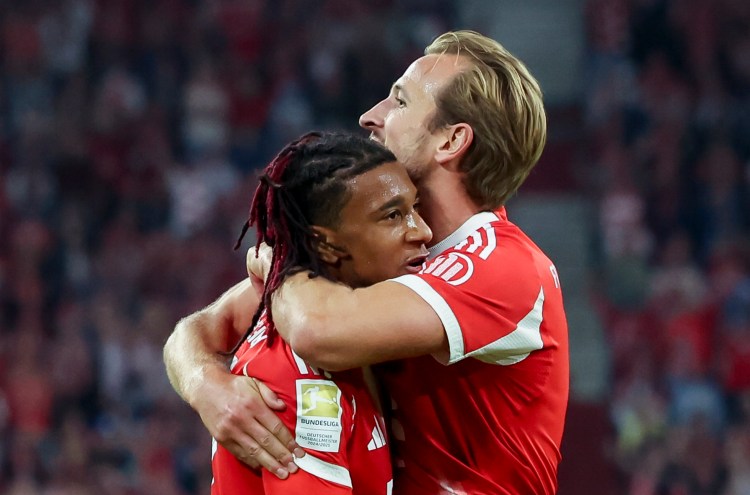
Right-midfield: Michael Olise (France)
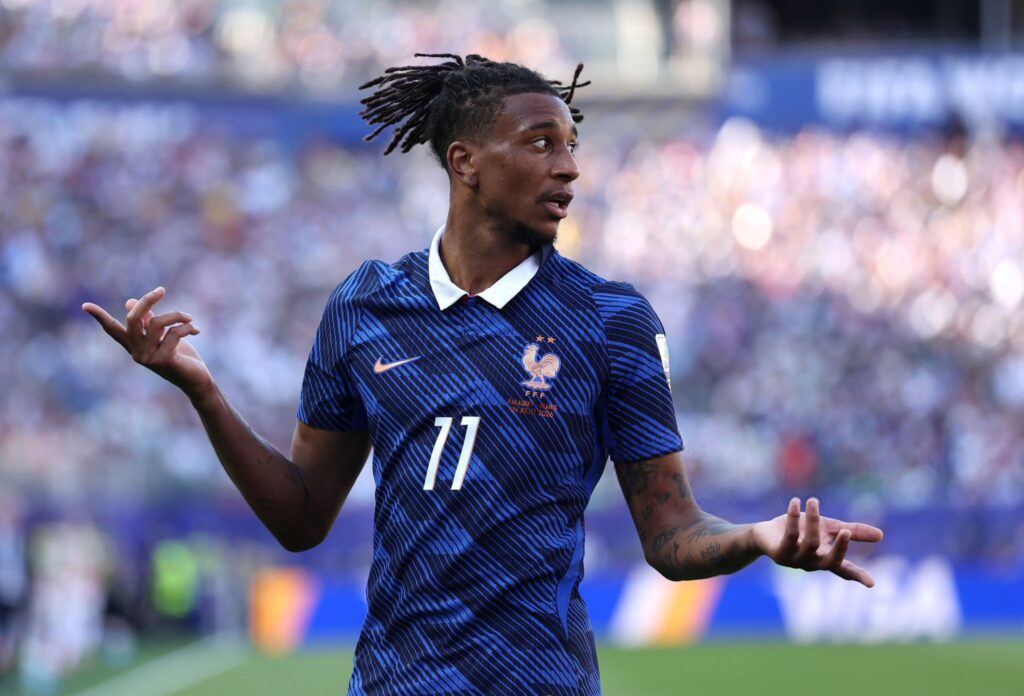
Michael Olise’s tournament will be remembered as one of the great creative displays in modern World Cup history. In his first-ever tournament outing with France, he went on to achieve an important milestone.
His seven assists broke Pelé’s 1970 record for most assists at a single edition, and his combination with Kylian Mbappé produced five goals between them, the most productive strike partnership of the last sixty years.
His place in the Team of the tournament was never in doubt, especially with his two assists in the bronze medal match helping France prevented an humiliating scoreline in a 10-goal thriller with England.
Striker: Lionel Messi (Argentina)
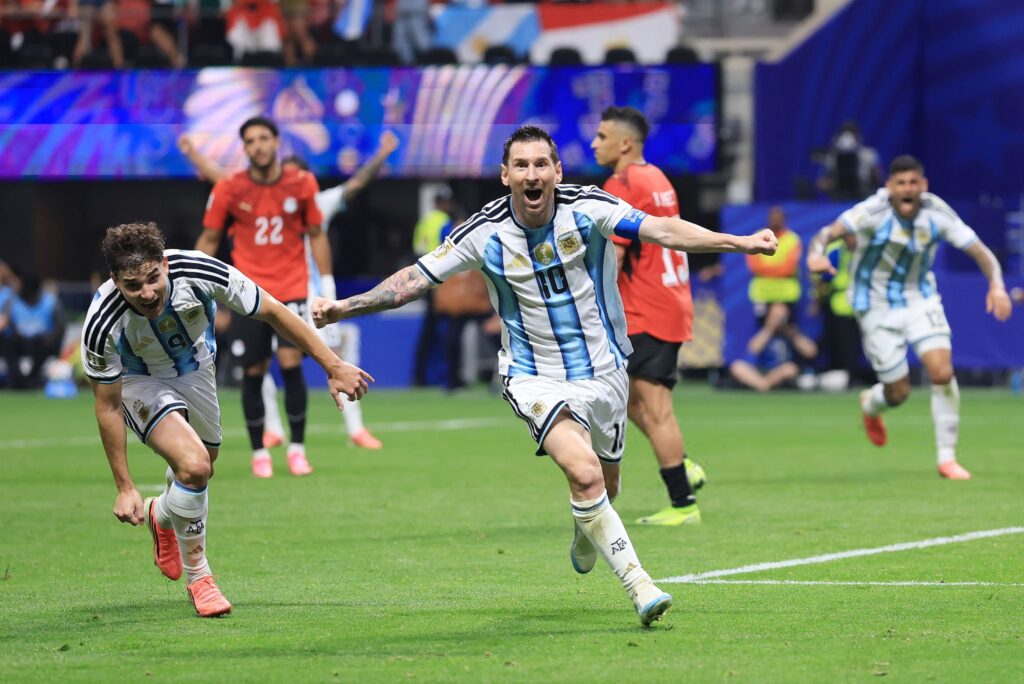
Even in a losing final, Lionel Messi’s tournament was extraordinary at 39. He was joint-leading scorers for large parts of the competition and set new career World Cup records for goal contributions along the way.
His influence on Argentina’s run to the final, even without the trophy at the end of it, was undeniable. He unfortunately lost the race for the golden boot to Mbappé as well as the all-time leading goalscorer at the tournament.
But if that was the last of Lionel Messi we’ll see at the World Cup, it has been such a pleasure, because even at the end of it, he remains in the company of the best of the new generation.
Striker: Kylian Mbappé (France)
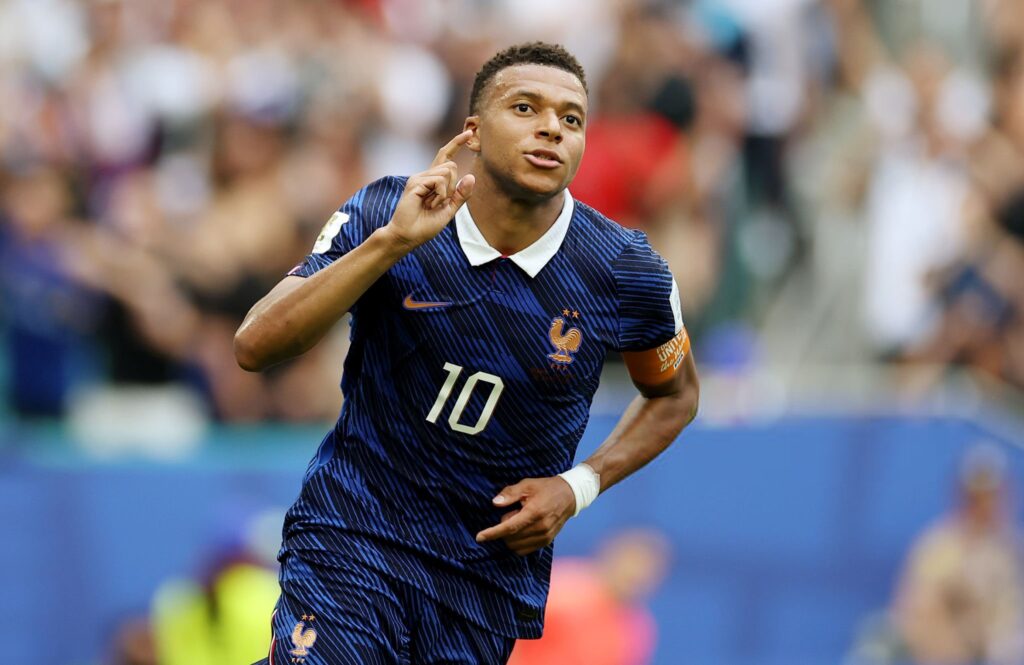
The World Cup is a Kylian Mbappé tournament, and for the second edition running, the Frenchman ended the tournament as its outright top scorer, edging ahead of Messi in the Golden Boot race by two goals.
In his final match of this edition, he became the all-time leading World Cup goalscorer with two goals against England, taking his tally to 10 and surpassing a personal best of eight, set in Qatar 2022.
His pace, finishing, and chemistry with Michael Olise and Ousmane Dembele made France’s attack must-watch television throughout the tournament, even as their run ended a step short of the final.
A Team Built From a Tournament Worth Remembering
What this XI really shows is that no single nation owned this World Cup, even if Spain walked away with the trophy. Greatness showed up everywhere. From iconic matches to performances.
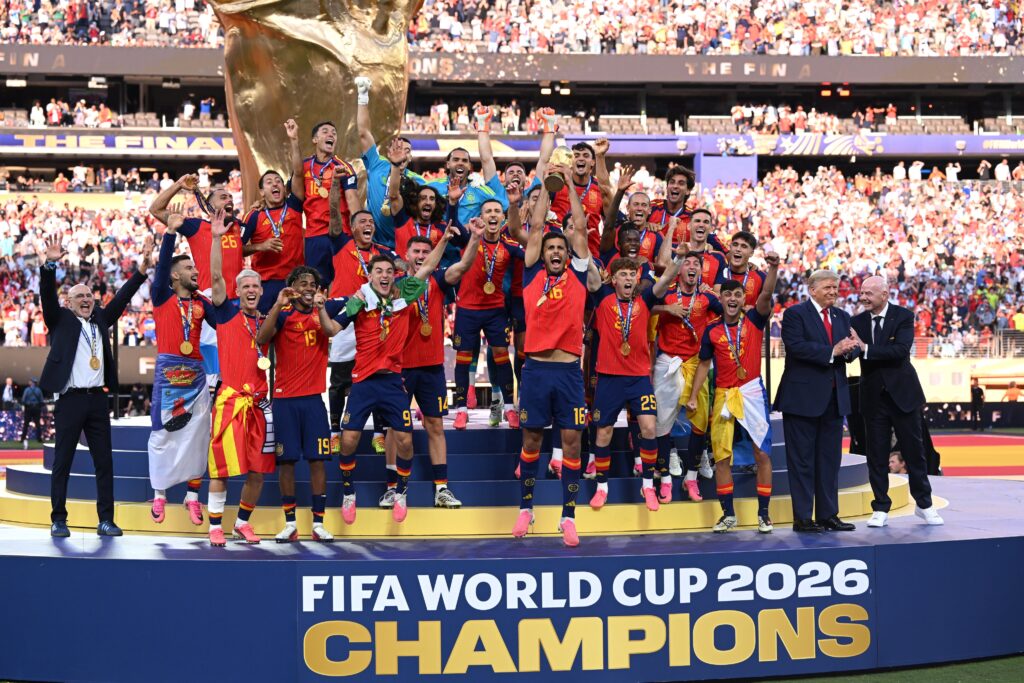
In a French attacker still standing strong after the final whistle of a losing campaign, in an English playmaker rewriting his country’s record books, in an Argentine captain proving age and heartbreak can’t dull genius, and in a Spanish midfielder quietly running an entire tournament without so much as a yellow card to his name.
All these are really the mark of a World Cup worth remembering. It doesn’t just crown a champion, it leaves behind performances that outlive the scoreline, players who turn a single summer into a permanent line on their legacy.
Some of these eleven may lift the trophy again, while others will spend years wondering what could have been. But for one tournament, on the same stage, they were all undeniably the best there was.