Which players best answer Argentina and Portugal’s search for new X Factors after Messi and Ronaldo?

Argentina and Portugal must look beyond Lionel Messi and Cristiano Ronaldo, with more than a few names among the leading candidates to become their next match-winning influences.
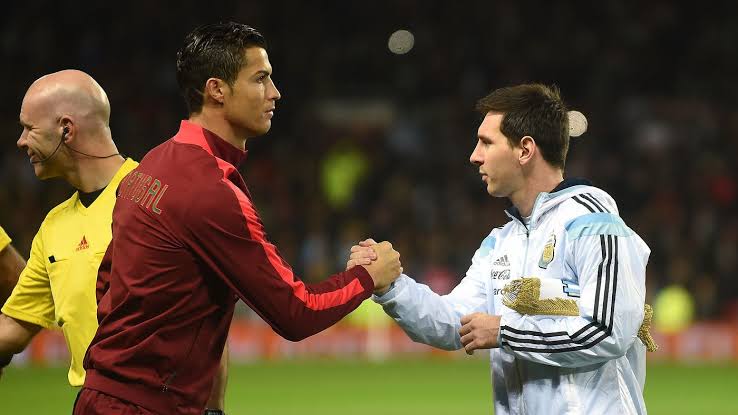
Football rarely gives a nation the privilege of watching two generational superstars define its identity for more than a decade. Argentina and Portugal have enjoyed precisely that luxury, with Lionel Messi and Cristiano Ronaldo becoming much more than players for their respective countries.
But the extraordinary chapters are now closed. Lionel Messi announced his retirement from international football in September 2026, while Cristiano Ronaldo confirmed his departure from Portugal on November 5, bringing an end to an international career that produced 146 goals in 234 appearances.
Their exits leave two of international football’s biggest teams facing an uncomfortable question: who steps forward when the match needs a moment of magic?
Finding somebody capable of reproducing their numbers is unrealistic, but finding players who can provide the inspiration, unpredictability and match-winning influence that made them indispensable is a more reasonable objective.
And both nations have promising candidates.
Argentina: Paz, Álvarez and Mastantuono
Argentina’s search begins with Nico Paz, arguably the most natural candidate to inherit the creative responsibilities Messi leaves behind.
It is like a reality waiting to happen for the player on the receiving end of Lionel Messi’s final assist in Argentina shirt, during the eight time Ballon d’Or winners’s farewell match against Benin Republic back in October.
The Como playmaker possesses several qualities that make him an exciting prospect. His close control, vision, ability to operate between the lines and willingness to attempt ambitious passes give him the tools to become a central figure in Argentina’s attacking structure.
His performances in October also offered further encouragement. Paz scored against Burkina Faso, then produced a goal and an assist in Argentina’s 4-0 victory over Bolivia. Those performances demonstrated that he could influence games beyond his club responsibilities.
At 22, he has time to develop into the creative reference point Argentina need. However, inheriting Messi’s number 10 responsibilities should not mean expecting him to reproduce everything the former Barcelona superstar offered.
Franco Mastantuono presents another intriguing possibility. The Fiorentina youngster offers something slightly different as he is more of a direct runner, possesses technical confidence, acceleration and the ability to attack defenders from wide positions.
His development will be particularly interesting because Argentina need somebody capable of injecting unpredictability into their attacking play. While Paz can dictate the tempo, Mastantuono has the potential to disrupt defensive structures through individual actions.
However, neither should be expected to carry the entire responsibility immediately, and that is where Julián Álvarez becomes particularly important.
The Atlético Madrid forward might not possess Lionel Messi’s extraordinary playmaking abilities, but he offers a different kind of match-winning influence with his intelligent movement, relentless pressing, technical quality and finishing. He makes the ideal candidate to become Argentina’s attacking reference point.
Álvarez has already established himself as one of the country’s most important forwards, and the next chapter offers him an opportunity to become the face of the national team’s attack.
Lautaro Martínez would ordinarily be another obvious candidate, although his November absence through injury means Argentina must initially explore alternative combinations and at 29, he is obviously not the suitable candidate to build a team around.
Ultimately, Argentina’s best solution might not be finding another Messi but building an attacking partnership around Paz’s creativity, Mastantuono’s unpredictability and, may, Álvarez’s goalscoring instincts.
Portugal: Félix, Leão and Ramos
Portugal’s situation is slightly different. While Argentina are searching for somebody to inherit Messi’s creative influence, Portugal must redistribute Cristiano Ronaldo’s extraordinary goalscoring responsibilities and leadership.
The first candidate for the latter is Bernardo Silva.
The Real Madrid man has long been one of Portugal’s most influential players, providing creativity, goals, assists and an exceptional willingness to take responsibility in difficult situations.
He is not a traditional replacement for Ronaldo, but he could become the team’s principal reference point. Although approaching the end of his international career too, his ability to create chances and willingness to attempt decisive actions make him particularly valuable.
With Ronaldo gone, Portugal will need Bernardo, who has also been named the team’s new captain, to become even more influential in determining how their attacking play develops whenever he is on the pitch.
Bruno Fernandes and Ruben Dias, captains at Manchester United and City respectively, will also thrive as his right hand men.João Félix is another fascinating candidate.
For years, the former Atlético Madrid forward was discussed as a potential successor to Ronaldo, although his inconsistent European career made those comparisons increasingly difficult to justify.
His resurgence under Jorge Jesus at Al-Nassr, however, has brought renewed attention, especially with the 72-year-old now the head coach of the Portuguese National Team.
Félix has become an important attacking figure alongside Ronaldo, demonstrating his ability to score, create and operate across different attacking positions. His technical quality and imagination make him one of the players capable of producing the unexpected.
Portugal’s new era could provide the 26-year-old with something he has rarely enjoyed: the opportunity to become the undisputed attacking protagonist.
Then there is Rafael Leão, arguably the country’s most naturally explosive attacking weapon, who has recently slow down, but has earned more favour with the new bosses at the national team.
The winger’s combination of acceleration, dribbling and physical power gives Portugal a dimension that few international teams can comfortably contain. At his best, Leao can eliminate defenders, stretch defensive lines and create opportunities without necessarily needing elaborate combinations.
However, consistency and decision-making remain important areas of development for the Galatasaray man, who must become more than an entertaining winger if he is to assume greater responsibility.
Gonçalo Ramos, meanwhile, offers a more straightforward solution to the goalscoring problem. He is the man to take Ronaldo’s place given what the five time Ballon d’Or winner offered in the latter stages of his international career.
The Milan striker has already demonstrated his finishing instincts for Portugal, scoring in three consecutive starts in the 2026 Nations League campaign so far. His movement inside the penalty area and ability to attack crosses make him a natural candidate to lead the frontline.
At 25, he has an opportunity to establish himself as Portugal’s first-choice centre-forward without competing with Ronaldo for the position.
Two nations facing one enormous challenge
Argentina and Portugal do not necessarily need another Messi or Ronaldo, what they need are players who can take ownership of important moments and give their teammates the confidence that something special remains possible.
For Argentina, Paz could become the creative heartbeat, Álvarez the attacking leader and Mastantuono the wildcard.
And for Portugal, Bernardo Silva and Bruno Fernandes offer leadership and creativity, Félix brings imagination, Leão provides explosive individual quality and Ramos supplies the goals.
There is no guarantee that any of them will reach the heights of their predecessors, because it is an unfair standard to impose on players whose careers are only beginning to define themselves, while some are almost at the end.
Lionel Messi and Cristiano Ronaldo spent more than two decades making the extraordinary look routine, so their successors should be judged on what they can build, not on what they are expected to replicate.
The next generation now has its opportunity, and the question is no longer who wears the famous shirts, but who has the personality and ability to make them their own.