Why £117M Morgan Rogers-Chelsea works | Talking tactics

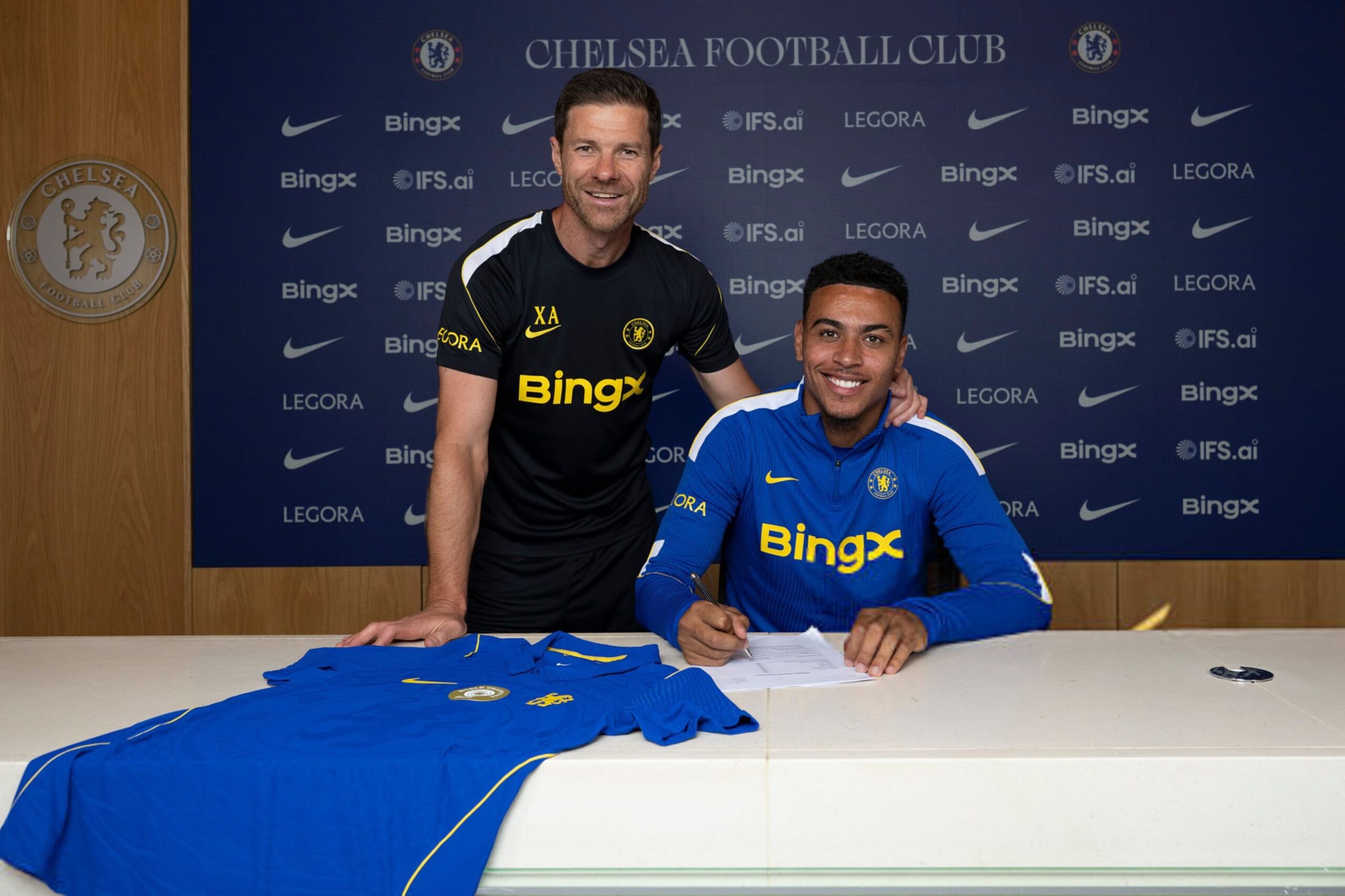
Morgan Rogers completes an inevitable move away from Aston Villa, joining Chelsea on a six-year contract worth £117 million, making him the most expensive signing in the history of the West London club.
Despite genuine interest from Arsenal, the 23-year-old ultimately decided to join Xabi Alonso’s team, reuniting with former Academy teammates Liam Delap and Cole Palmer, the latter of whom he admitted to being excited to be back together again.
He becomes only the third player to be transferred from Aston Villa to Chelsea in the 21st century, joining the duo of Carney Chukwuemeka and Omari Kellyman, who both switched Birmingham for London not long ago.
His arrival comes with a lot of expectation from a team rebuilding its attack, with almost all of the candidates expected to star for them under Xabi Alonso next season being players who joined just last summer and this.
How Expensive is Morgan Rogers?
Chelsea’s £117m swoop for Morgan Rogers instantly rewrites several record books, though not quite every one of them. Within the club, it’s now the biggest fee ever paid, overtaking the £107m spent on Enzo Fernandez back in 2023.
Across English football more broadly, Rogers becomes the most expensive British player in history, edging past the £116m Manchester City paid Nottingham Forest for Elliot Anderson just days earlier.

He doesn’t, however, claim the Premier League’s all-time transfer record outright, a tag that still belongs to Alexander Isak, whose move to Liverpool from Newcastle United commanded an even heavier fee at £125 million.
Globally, though, Rogers now sits comfortably among the five or six most expensive transfers ever recorded, trailing only true megadeals like Neymar’s move to PSG and Kylian Mbappé’s, elite company for a player who started last season at Villa Park.
What is Morgan Rogers’s Style of Play?
Rogers is a modern hybrid attacker — comfortable as a winger, a No. 10, or a false 9, but always at his most dangerous drifting off the last line into the inside channels rather than staying glued to the touchline.
The England international carries the ball with real purpose, is comfortable turning under pressure in tight spaces, and has an instinct for arriving late into the box rather than starting there.
His numbers back up the profile. Last season alone, Rogers produced 14 goals and 11 assists in 55 appearances for Aston Villa — the only English player with more for a Premier League club was former Villa teammate Ollie Watkins.
His output reflects a player contributing in the final third as much as creating for others. That dual threat, goals and chances created in near-equal measure, is exactly why Chelsea see him as more than a specialist.

He’s a genuine versatile attacking player rather than a player forced to fit one system, and at 23, with his prime still more than half a decade away, he can only get better, especially in the company of more talented set of players.
A risk taker, which is why he has been dispossessed (80) and recorded more unsuccessful touches (133) than any other Premier League player this season.
This doesn’t make him any less of a player, it just highlights that he is your go-to man when you need someone to make things happen and be unpredictable.
Why Chelsea move is Perfect for Morgan Rogers?
Tactically, this fits like a glove. Rogers isn’t a traditional winger, yet he’s most dangerous drifting infield from the left, attacking half-spaces rather than hugging the touchline, just like Florian Wirtz under Alonso at Bayer Leverkusen.
Under the Spaniard’s fluid, position-rotating system, that versatility becomes an asset rather than a puzzle because whatever shape Chelsea deploy, Rogers can be trusted to gravitate left and find those inside channels naturally.
Crucially, he isn’t being asked to fit a rigid mould unlike if he had moved to Arsenal. At Chelsea, he’ll be given license to roam and interpret space instinctively — and as Rogers himself made clear, that freedom is exactly what brings him joy on a football pitch.
How Chelsea Could Line Up With Morgan Rogers
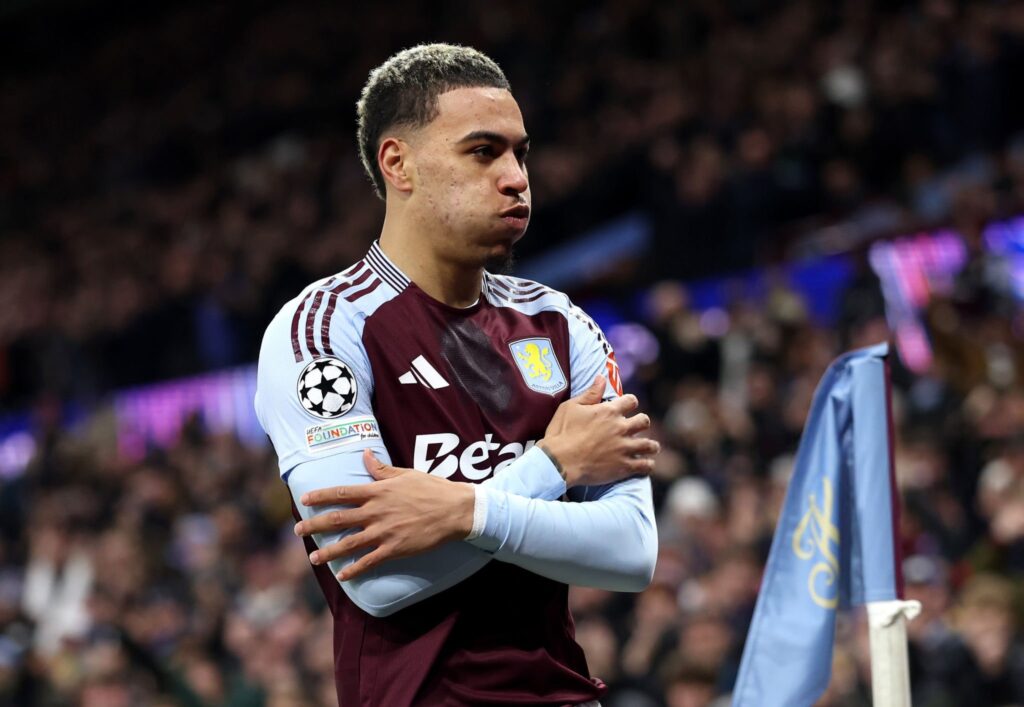
Chelsea view Rogers as a genuine four-position weapon, and Xabi Alonso is expected to rotate his role based on matchday demands.
4-3-3, left wing: The most straightforward fit. Rogers occupies the left channel in a front three, with Palmer or Estevão on the right and Joao Pedro through the middle.
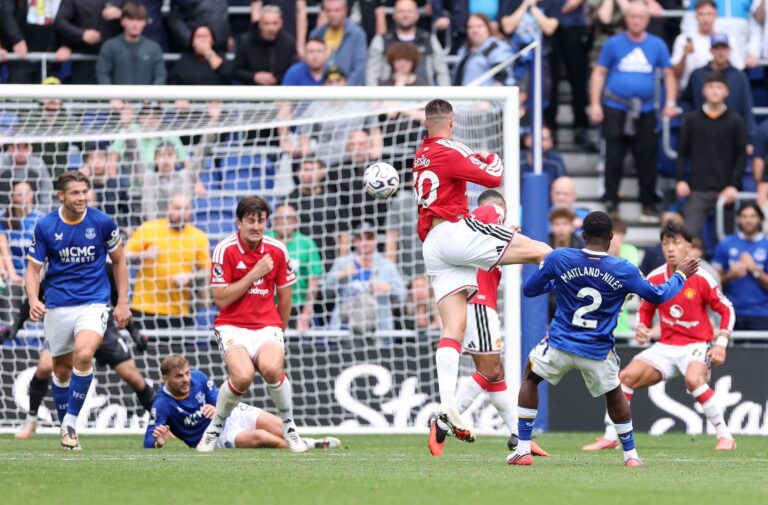
Expect the Manchester City Academy graduate to tuck inside off the last man, overloading the half-space while a left-back provides the width — an example was his brace performance against Man United at Villa Park last season.
3-4-3, No. 10: Alongside Palmer in a double-ten, sitting just behind Joao Pedro. Here, Rogers can float between the lines, combine in tight areas, and arrive late into the box as the auxiliary striker peels wide.
4-2-3-1, attacking midfielder: A more central, orthodox No. 10 role, Rogers as the creative link between midfield and Joao Pedro up top, dictating tempo through the middle third.
In the last Premier League season, only three players, Jeremy Doku, Cody Gakpo, and Bukayo Saka, made more carries ending in a shot or chance creation then his 46 for Aston Villa, a testament to the threat he carries with the ball at his feet.
4-4-2, false 9: Paired with Joao Pedro, Rogers drops deep to drag defenders out, creating space in behind for runners. This is a fluid and unpredictable frontline built on movement rather than fixed positions.
Overall, to make him more effective, Chelsea will have to add an attacking left-back to hold the width when the former Middlesbrough youngster drifts inside. It makes perfect sense why they are keen on Rayo Vallecano’s Pep Chavarria.
Why £117 Morgan Rogers-Chelsea Works?
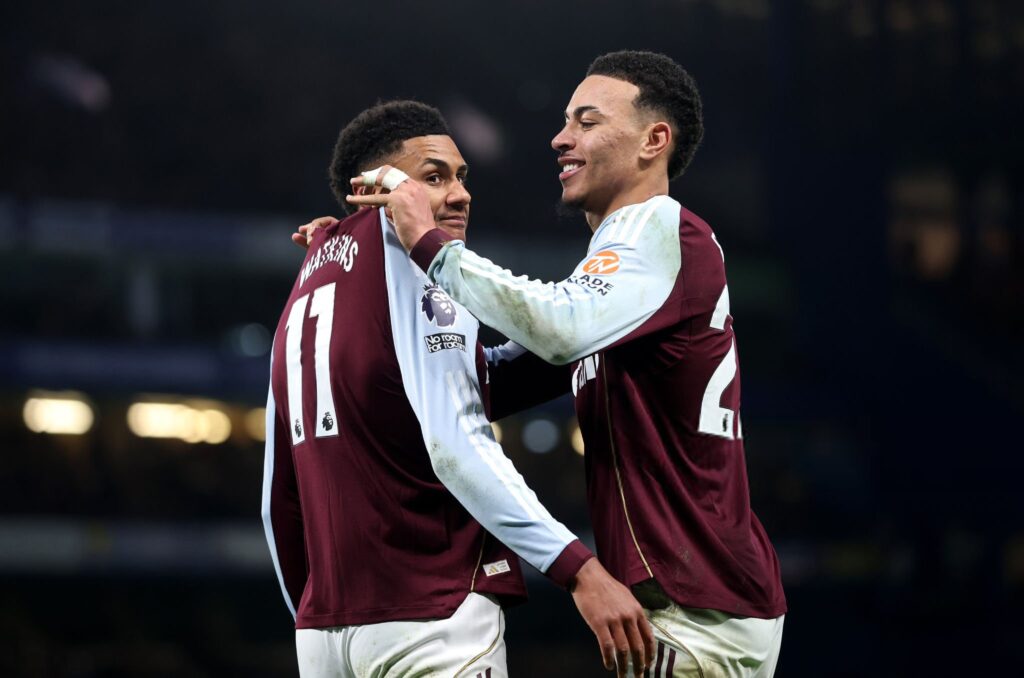
Beyond fee brackets and formations, this move solves a very practical problem for Rogers, especially game time. Arsenal’s left flank was already crowded, and with Christos Tzolis arriving with a reputation of the most productive winger in the world last season, things would be awkward.
Rogers would’ve walked into fresh competition rather than a guaranteed shirt, with little patience for a slow start given the money already committed elsewhere, and the fact that he could be competing with captain Martin Ødegaard.
At Chelsea, no such traffic jam exists. Alonso’s system thrives on rotation, not hierarchy, and Rogers arrives as the closest thing to a first-choice left-sided operator in a squad still finding its shape.
While critics have highlighted that he is too expensive for £117 million, Chelsea wouldn’t care if he is able to meet expectations in London, especially in a market where almost every talent costs nine figures.
Rogers arrives at Chelsea with a wealth of experience in both Champions League and Europa League, while he is also fresh from World Cup outing with Three Lions, where he started and assisted their only goal in the semi-final.
The fee may be astronomical, but that is the reality of the current transfer market, especially when facing competition to sign the best player at a club competing in the Champions League next season.
Reunited with Palmer and Delap if he stays, in a team built to grow around him rather than compete with him, Rogers gets what every young talent actually needs to thrive. Minutes, trust, and a system built for his exact profile.