
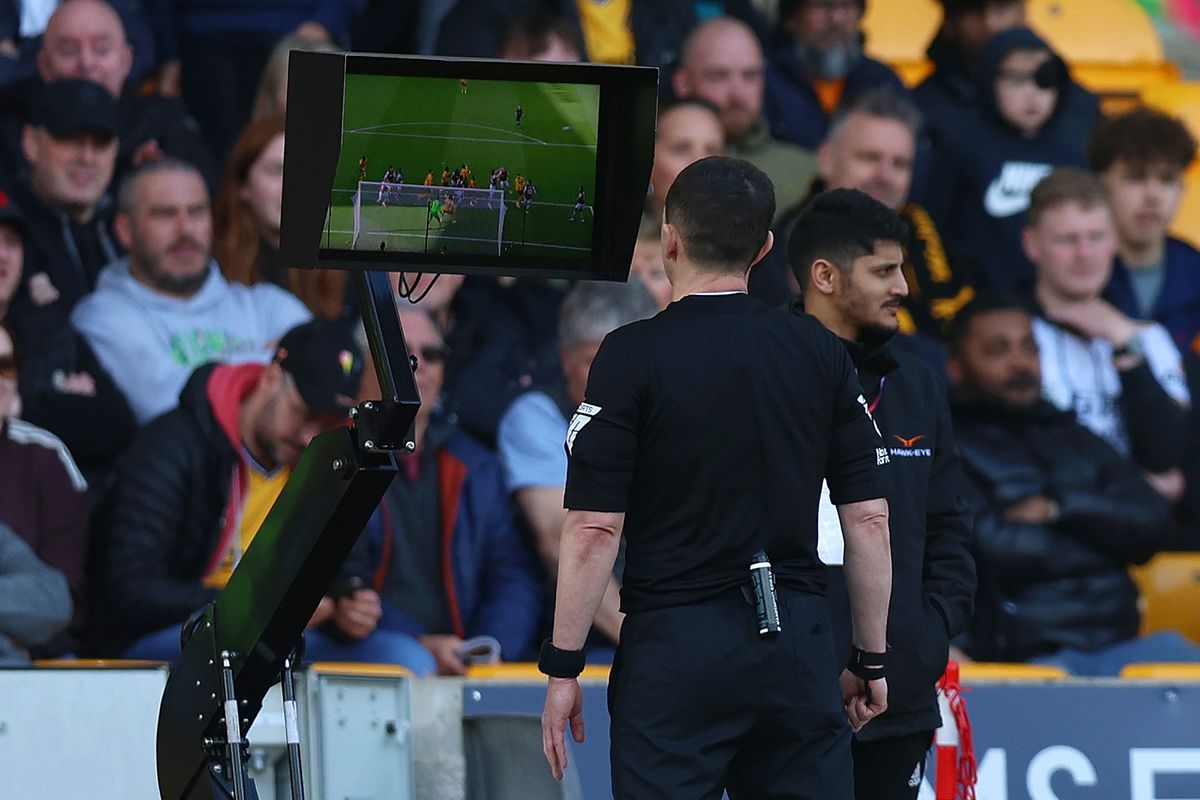
Ranking the Premier League’s biggest VAR beneficiaries and victims after seven years

A seven-year VAR analysis reveals the Premier League clubs with the biggest positive and negative decision balances, with Newcastle and Wolves at opposite ends of the table.
The Video Assistant Referee, VAR, was introduced to the Premier League to reduce major refereeing mistakes, but seven seasons later, the technology remains one of the most debated aspects of English football.
Penalty decisions, disallowed goals, marginal offside calls and reviews that failed to correct obvious mistakes have continued to fuel arguments among clubs, players, fans and other stakeholders.
Rather than focusing on individual incidents, the seven-year figures provide an opportunity to examine the overall pattern of VAR decisions involving Premier League clubs. Data shows Newcastle with the highest positive net balance at +15, while Wolves have recorded the lowest figure at -15.
The numbers measure the difference between decisions that went for and against each club and do not, by themselves, demonstrate any deliberate favouritism, but glaring errors that were later confirmed after the games.
The figures also throw up some notable contrasts. Arsenal, despite winning the 2025/26 Premier League title, have the worst balance among the clubs still in the top flight at -10. Manchester clubs and Aston Villa are all on +6, while Liverpool’s +1 record leaves them almost level.
With VAR controversies continuing to emerge, the long-term figures offer another way of looking at how the technology has influenced different clubs.
Seven-year VAR net balance ranking
- 1. Newcastle United — +15
- 2. Crystal Palace — +8
- 3. Brighton — +7
- 4. Aston Villa — +6
- 5. Manchester City — +6
- 5. Manchester United — +6
- 7. Chelsea — +3
- 8. Liverpool — +1
- 9. Tottenham Hotspur — -4
- 9. West Ham United — -4
- 11. Everton — -5
- 12. Arsenal — -10
- 13. Wolves — -15
The gap between Newcastle and Wolves is particularly notable, with the two clubs occupying opposite ends of the seven-year scale. Arsenal’s position also stands out given their recent domestic success, showing that a club’s long-term VAR balance does not necessarily correspond with its results on the pitch.
Major controversies have continued throughout the VAR era, including the incorrectly disallowed Luis Díaz goal against Tottenham and a series of disputed penalty and offside decisions involving several leading clubs.
With more contentious calls still appearing in the Premier League, the debate over VAR’s effectiveness and consistency shows little sign of disappearing.





football without VAR was better
cos they didn’t give people hope or consciousness of monitoring and video backup like now and we had it in mind that any ref and lines man oversight is gone