Fernandes, Maguire and the Màngúdú of Manchester United who survive every manager’s fall

Manchester United keep sacrificing managers for their failures while long-serving players such as Bruno Fernandes, Harry Maguire, Diogo Dalot and Luke Shaw survive every downfall without sufficient accountability.
At Manchester United, managers come and go, but some of the players who have presided over years of disappointment remain. As another managerial reign ends, the question is no longer simply who should replace the coach, but when the players will finally be held accountable.
Erin kú, màngúdú fi jẹ. Ẹfọn kú, màngúdú fi jẹ.
This is a Yoruba proverb about the grass-cutter who benefits whenever a bigger animal dies. But there is a darker lesson when applied to Manchester United: what happens when the same person survives every downfall, watches others take the blame and remains in a position to benefit from the next change?
Since Sir Alex Ferguson retired in 2013, Manchester United have repeatedly turned to the manager’s office for solutions to problems that have persisted on the pitch. David Moyes, Louis van Gaal, José Mourinho, Ole Gunnar Solskjær, Erik ten Hag, Ruben Amorim and Michael Carrick have all had their turns in the Old Trafford hot seat.
Carrick, who became the club’s seventh permanent manager of the post-Ferguson era, was dismissed earlier in the month, with Mauricio Pochettino confirmed as his successor.
Yet, through much of this managerial turbulence, familiar faces have remained.
Luke Shaw is the longest-serving of the group, having arrived from Southampton in 2014. Diogo Dalot followed in 2018, Harry Maguire in 2019 and Fernandes in January 2020.
They have experienced different managers, different tactical philosophies, expensive recruitment projects and several failed attempts to restore the club to the summit of English football.
Yet they remain part of the furniture.
The problem is not simply their longevity. It is the uncomfortable question of whether a group of players who have repeatedly failed to deliver sustained progress should continue to enjoy the security that successive managers have not been afforded.
Fernandes: The captain with unanswered questions
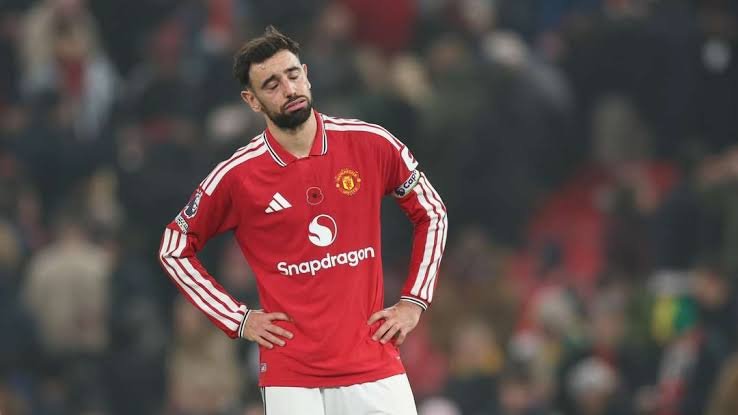
Fernandes is perhaps the most complicated case.
Since arriving from Sporting CP for an initial £47 million, the Portuguese midfielder has been one of Manchester United’s most productive players. His goals, assists and influence have often kept the club competitive during otherwise miserable campaigns.
His individual quality is not in question. He even broke the Premier League’s assists record in 2025/26, recording 21 in a season that ended with United finishing third. But productivity cannot provide permanent immunity from criticism.
As captain, Fernandes carries additional responsibility. His public criticism of Carrick’s tactical approach following the humiliating 4-1 Champions League defeat at Como raised questions about leadership and accountability.
He questioned the coaching staff’s pressing instructions while Carrick challenged his players’ motivation and intensity. It was another illustration of a dressing room where the manager’s authority appeared increasingly vulnerable.
Fernandes has every right to demand better from his coaches. But the same standards must apply to him and his teammates. Being the team’s most productive player does not automatically make him immune to criticism, particularly when his responsibilities extend beyond goals and assists.
As captain, he must also be judged on his leadership, composure and ability to influence the team when things go wrong.”
Maguire and Dalot: Familiar faces, familiar problems
Harry Maguire arrived from Leicester City in 2019 for £80 million, becoming the world’s most expensive defender at the time.
Expected to bring authority, leadership and defensive stability. Instead, his United career has become a story of managerial changes, periods of uncertainty and recurring questions about his suitability to lead a defence capable of challenging for major honours.
Maguire has had his moments of redemption, particularly after recovering his place under Erik ten Hag. But his individual resurgence has not translated into the defensive consistency Manchester United have desperately needed.
Nevertheless, he continues to survive several managerial changes, while the club is still searching for a reliable defensive identity.
Diogo Dalot, meanwhile, arrived from Porto in 2018. Having survived the tenures of Mourinho, Solskjær, Rangnick, Ten Hag, Amorim and Carrick, he has become another permanent fixture in a team that has struggled to establish defensive consistency.
His versatility has been useful, but it has also exposed United’s inability to settle on a reliable defensive structure. His performances at left-back have attracted particular criticism, with questions over whether he offers the defensive security required.
Shaw and the comfort of survival
Luke Shaw’s case deserves a little more nuance.
His injury problems have repeatedly disrupted his availability, but he has also produced some excellent performances. Indeed, he started every Premier League match in 2025/26, an achievement that underlines his importance when fit.
Shaw’s longevity is remarkable, but that alone cannot be mistaken for sustained success. He has witnessed almost every failed attempt to rebuild Manchester United since Ferguson’s departure.
The question is whether the club has ever demanded enough from its established players to match the expectations attached to its badge.
Yet, the point is not that every surviving player is responsible for every failure, but that longevity should not become an entitlement, particularly when the club’s standards have fallen so dramatically.
The Màngúdú problem at Manchester United
There is a bigger issue here than individual performances.
Manchester United have repeatedly treated managerial appointments and dismissals as opportunities to reset their fortunes. But changing the person in the dugout without addressing the weaknesses within the playing squad only perpetuates the same cycle.
Michael Carrick initially appeared to offer a solution, winning 11 of his first 16 matches in his second spell and guiding United back into the Champions League. But when results deteriorated, he became the latest casualty.
The expensive recruitment without a coherent long-term footballing identity continues to taunt the club, as every manager that arrived had his own kind of players. Yet, these quartet have managed to survive the years.
Amad Diallo also deserves scrutiny. Despite the considerable hype surrounding him at Old Trafford, the Ivorian attacker was a regular fixture in Michael Carrick’s side but failed to score a single goal throughout the manager’s 11-month tenure. Yet, where is the accountability?
That is where the Màngúdú metaphor becomes particularly relevant.
When the elephant dies, Màngúdú feasts. When another falls, Màngúdú feasts again. But what happens when the same Màngúdú is left behind, surrounded by the ruins of everything he helped bring down?
At Manchester United, managers have repeatedly paid the price for collective failures. Players have survived, with their contracts renewed and sometimes with the terms improved, and another manager arrived with promises of a new beginning.
There is no suggestion that Fernandes, Maguire, Dalot or Shaw single-handedly engineered the departures of their former coaches, after all they also played significant parts in the good spells.
But they cannot be permanently exempt from scrutiny.
Manchester United cannot keep sacrificing managers while protecting players who have been part of the problem for years. The club needs more than another tactical blueprint, another press conference or another expensive transfer window.
It needs accountability.
Otherwise, Mauricio Pochettino will inherit the same problems, the same dressing-room antics and, potentially, the same Màngúdú.
Erin kú, màngúdú fi jẹ. Ẹfọn kú, màngúdú fi jẹ. But when will Manchester United finally hold the Màngúdú accountable?