
Why Cristiano Ronaldo’s 1000-goal can’t come fast enough

Cristiano Ronaldo’s 1000-goal can’t come fast enough, because the Portugal captain’s recent displays prove the elite game is leaving him behind, and he needs to walk sooner rather than later.
A novice will probably question the lore behind the Cristiano Ronaldo hype, since football sometimes has no memory, and the monumentality of past achievements can be routinely dismantled by the reality of the present.
After witnessing masterclasses from Lionel Messi, Kylian Mbappé, and Erling Haaland earlier in the ongoing FIFA World Cup tournament, the world tuned in to see Cristiano Ronaldo deliver his own, but it wasn’t forthcoming.
For two decades, the Portuguese dictated the terms of that reality. He ran faster, jumped higher, and scored with a frequency that reduced world-class defenders to mere bystanders.
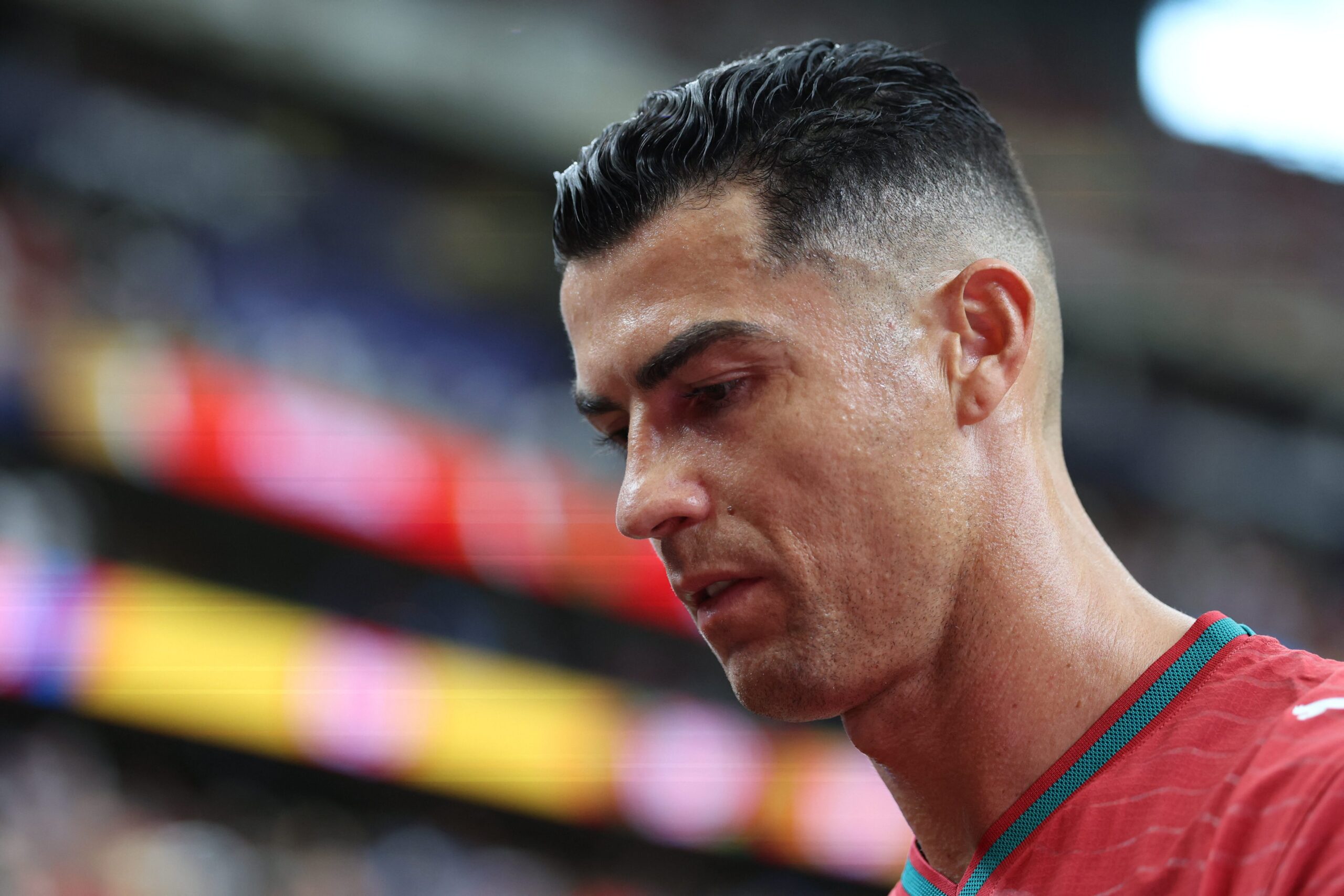
Yet, as Portugal stumbled to a sobering 1-1 draw against the Democratic Republic of Congo in their opening fixture of the 2026 FIFA World Cup in Houston, the lens focused heavily on the legendary number seven.
At exactly 41 years and 132 days old, Ronaldo became the oldest outfield player to start a match in World Cup history. But history, it seems, is no longer enough to sustain the physical demands he is making of his own body.
Why the Cristiano Ronaldo’s 1000-goal can’t come fast enough?
The statistics from that night in Texas make for painful reading for those who remember Cristiano Ronaldo, once an unstoppable force of Madrid, Manchester, and even the country that encapsulates Madeira.
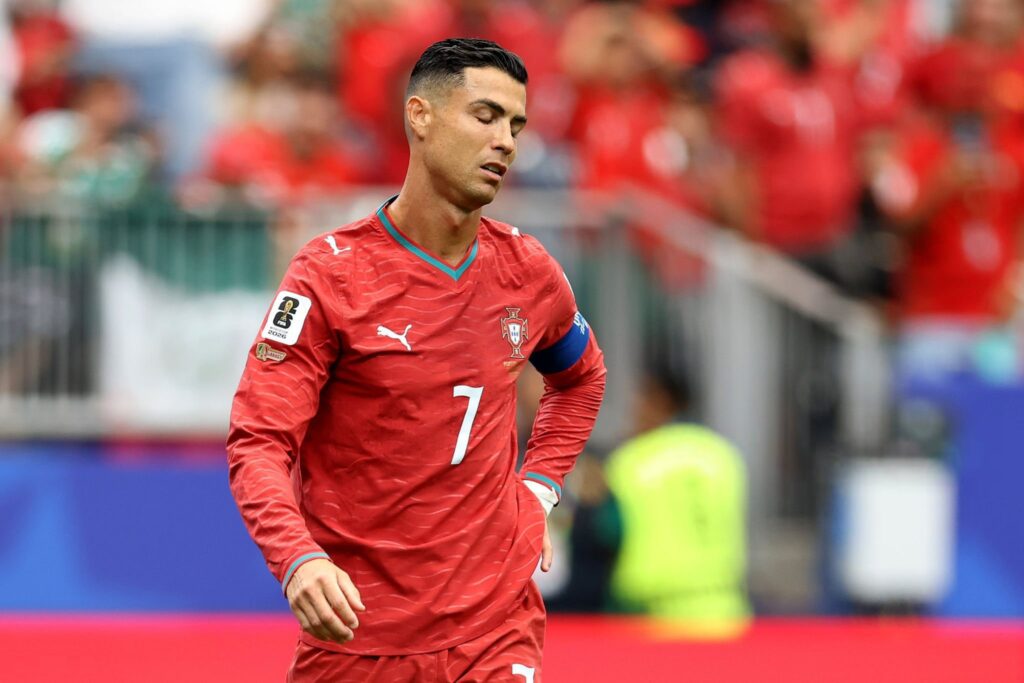
However, in a match where Portugal commanded the lion’s share of possession, the five-time Ballon d’Or winner cut an isolated, static figure at the apex of the attack.
He managed just 25 touches of the ball across the entire 90 minutes. To put that into perspective, the Congolese goalkeeper, Lionel Mpasi-Nzau, had more active involvement in building play than the Al Nassr striker.
It also represented his fewest touches in any major international tournament match for Portugal, where he completed 90 minutes.
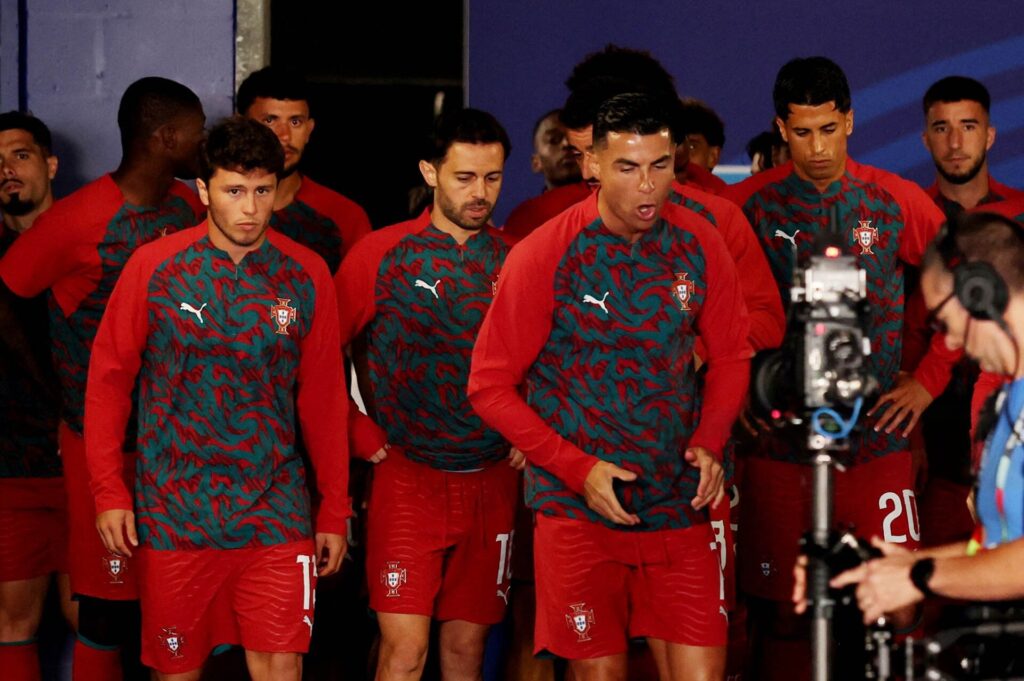
The Portuguese midfield, blessed with the creative spark of Bruno Fernandes, Bernardo Silva, Vitinha, and João Neves, seemed entirely geared toward feeding a talisman who could no longer generate his own yard of space.
When the opportunities did arrive, the sharpness was gone. Two glorious second-half chances went begging, skewed wide from close range, leaving him visibly frustrated as he failed to test the goalkeeper from three shots.
Why the Cristiano Ronaldo’s 1000-goal can’t come fast enough?
To finally leave the company of the undeserving
To place the entirety of the blame on the shoulders of the aging icon would be a gross distortion of what transpired in Houston, because while Ronaldo cuts a stationary figure, the supporting cast tasked with feeding him was riddled with its own collective paralysis.
The golden generation of Portuguese creators, supposedly the engine room of this tournament charge, delivered a performance that bordered on a shocking abdication of duty.
Bruno Fernandes was uncharacteristically sloppy, repeatedly turning over possession in areas where he usually dictates tempo. It took the Manchester United captain until the 92nd minute to create one chance.
Beside him, the usually dominant Vitinha looked thoroughly overwhelmed by the Congolese physicality, failing to break the lines or offer any sense of verticality.
Bernardo Silva, usually the master of spatial awareness, spent the evening drifting aimlessly into cul-de-sacs, completely detached from the final third. He was even lucky to get away with a yellow after a bad first-half tackle.
More damning than their technical inefficiency, however, was an underlying mood that felt distinctly frosty. On multiple occasions, Fernandes and Bernardo actively chose to bypass their captain when he had intelligently peeled off his marker, opting instead for sideways passes or speculative long-range efforts.
It looked less like tactical discipline and more like an on-pitch freeze-out—a frustrating display of petulance from a midfield that seemed to have collectively decided that their talisman was no longer worth the service.
If Ronaldo is to be judged by the high standards of the present, his teammates must also face the music for playing as if they were entirely above the man who carried the nation for two decades.
Yet, even though these players were terrible, Cristiano Ronaldo was a player known for doing it all, but at 41, he is no longer the same player, but the expectations from fans will continue to mirror the good old days.
The Reality of the Desert and the Drought
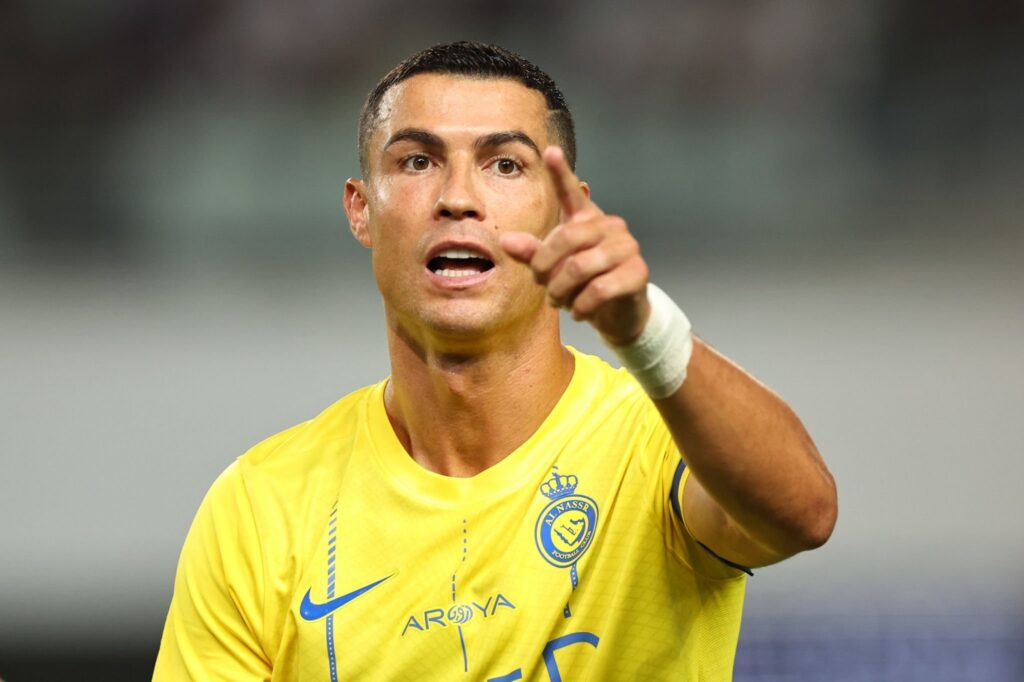
There is a distinct reason why a player of Ronaldo’s historic pedigree currently plies his trade in the Saudi Pro League with Al-Nassr, but as long as he continues to play in the National team, the world will always seek his prime.
The elite European and global competitions demand a furious intensity out of possession, a tactical burden a 41-year-old body simply cannot shoulder.
In the lower tempo of domestic Middle Eastern football, the goals still flow, keeping the dream of the Cristiano Ronaldo’s 1000-goal mathematically alive, but international football offers no such insulation.
The drought on the grandest stages has become impossible to ignore. Cristiano Ronaldo has zero goals in the knockout stages of the previous World Cup in Qatar, didn’t score in the entirety of the European championship in 2024, and has now reached 10 consecutive games without a goal in a major international tournament.
Where he once used his explosive acceleration to leave the world’s finest defenders trailing in his wake, the former Juventus man now finds himself routinely crowded out by disciplined, physical backlines.
The longer he holds on, trying to bend time to his absolute will, the more he risks shifting the global perception.
The danger is no longer about his status as an all-time great, but that the final chapter of his career will be remembered for a lack of pace and mobility rather than the predatory instincts that defined him.
Why the Cristiano Ronaldo’s 1000-goal can’t come fast enough?
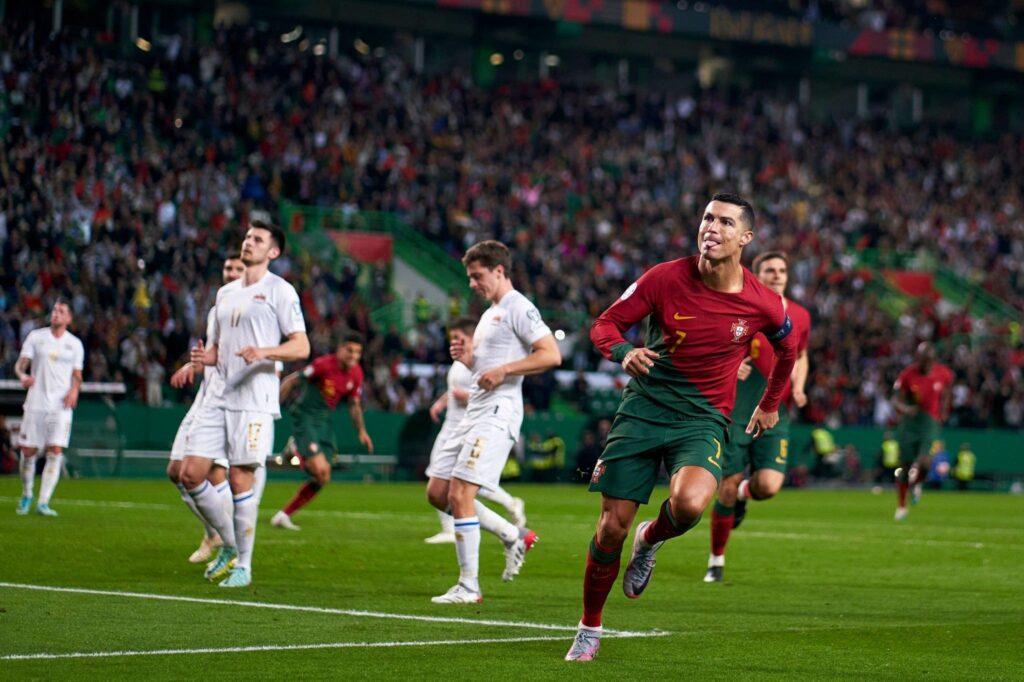
The final target
For a man driven by an almost pathological obsession with records, the pursuit of the Cristiano Ronaldo 1000 goal milestone feels less like an accolade and more like a final barrier to exit.
He currently sits within touching distance of the four-figure mark, a number that would definitively close the book on his historic rivalry with Lionel Messi and provide the perfect justification to walk away.
Footballers rarely know when to say goodbye, particularly those who have scaled the absolute summit of the sport, and if there’s anyone to be held at that standard, it is Cristiano Ronaldo.
But the performance against DR Congo proved that the elite international game is moving at a speed that is slowly leaving its greatest goalscorer behind.
For the sake of his legacy, and for a golden generation of Portuguese talent vying to write their own story, those 27 remaining goals to reach a millennium need to arrive with immediate urgency.
And when they do come, the 1,000th goal surely wouldn’t be just celebrated as a monumental achievement, but also welcomed as the final whistle on a career that has nothing left to prove.



One Comment