Guinea’s No. 10 controversy explodes as Ilaix Moriba’s father challenges NT coach to prove accusations

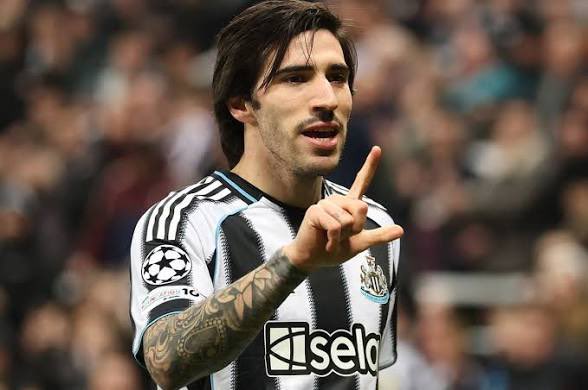
Ilaix Moriba’s father has challenged Guinea coach Paulo Duarte to provide evidence that the midfielder demanded the No. 10 shirt, escalating a growing dispute that threatens to undermine unity within the national team.
A dispute over the iconic No. 10 shirt has developed into an uncomfortable confrontation between Guinea head coach Paulo Duarte and the family of Ilaix Moriba, raising questions about dressing-room unity and the manager’s handling of one of the country’s most prominent players.
What initially appeared to be a disagreement over shirt numbers has now become a public controversy, with Ilaix Moriba’s father challenging the National Team coach to provide evidence that his son demanded preferential treatment at the expense of his teammates.
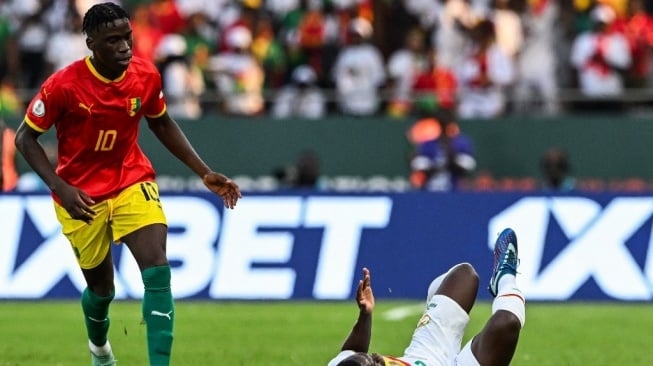
The midfielder, who switched international allegiance from Spain to Guinea, previously wore the No. 10 shirt but has reportedly been unhappy since Aliou Badara Baldé took over the number.
According to reports from Guinea, Moriba allegedly wants the shirt reserved for him as a condition for continuing his international career. However, his father’s intervention has thrown that version of events into question.
Duarte takes aim at Moriba’s alleged demands
The controversy intensified after Paulo Duarte reportedly addressed the situation during a press conference ahead of Guinea’s November international fixtures.
The Portuguese coach defended Baldé’s right to retain the number, pointing to his commitment and willingness to represent the country regardless of the team’s results.
He reportedly questioned whether Ilaix Moriba deserved to wear the shirt, before delivering a particularly harsh assessment of the midfielder’s personality.
“You have a very big ego, and for you, only you matter. It doesn’t work like that with me,” Duarte reportedly said.
The comments have attracted attention because they went beyond a simple explanation of the coach’s decision regarding shirt allocation.
His principle, howbeit reasonable for any international manager, it remains unclear whether Moriba actually made the demand attributed to him remains a separate question because of the recent updates on the controversy.
Moriba’s father challenges Paulo Duarte
The midfielder’s father has now offered a different account in an exclusive interview during a visit to Conakry, insisting that his son has never asked Guinea’s coaching staff to reserve the No. 10 shirt for him and has challenged Duarte to provide evidence supporting his accusations.
Rather than allowing the disagreement to develop into a personal battle, he urged the coach to prioritise team spirit and avoid statements capable of creating divisions within the squad.
His intervention raises an uncomfortable question of if 23-year-old Moriba never demanded the shirt, why has the coach publicly questioned his character over the issue?
Duarte has every right to decide who wears which number, but he also has a responsibility to manage disagreements without unnecessarily damaging relationships within his squad. His statement left Moriba out to dry.
Is the No. 10 shirt becoming more important than Guinea?
The controversy is particularly intriguing because Moriba is not an ordinary figure in Guinea’s football story.
Born in Conakry in January 2003, he developed through Barcelona’s famous academy, represented Spain at youth level and eventually chose to play senior international football for Guinea.
His experience in European football playing for Barcelona, Leipzig, Valencia and Celta Vigo makes him an important figure for the Syli National, but it does not automatically entitle him to a particular shirt number.
Baldé also deserves recognition. If he has consistently represented Guinea and earned the right to wear the number, there should be no reason to remove it simply because another player previously occupied it.
The No. 10 shirt carries considerable symbolism in football, often associated with creativity, leadership and responsibility. Nevertheless, it remains a squad number, not personal property.
The bigger concern is how the disagreement has become public.
Duarte must avoid creating a bigger problem
There is no doubt that international managers must establish authority. Players cannot be allowed to place personal ambitions above the collective interests of their countries.
However, authority should not become an excuse for turning dressing-room disagreements into public confrontations.
Moriba’s absence from Guinea’s November squad has also attracted attention, although Duarte subsequently indicated that the midfielder had reported an injury. There is currently no established evidence that his withdrawal was connected to the shirt dispute.
Fortunately, Guinea did not allow speculation overshadow their preparations for the 2027 African Cup of Nations qualifiers as they kickoff the November games with a 2-1 home win over Eritrea in Conakry.
Ultimately, Paulo Duarte must clarify the allegations, while Moriba must also demonstrate that his commitment to Guinea goes beyond individual recognition.
If the midfielder genuinely demanded preferential treatment, the coach would be justified in addressing it. But if the allegations are unfounded, the public criticism could prove unnecessarily damaging.
The question is no longer simply who deserves Guinea’s No. 10 shirt. It is whether the country’s football authorities can prevent an avoidable disagreement from becoming a much bigger dressing-room problem.
Guinea need players who put the badge before personal interests, but they also need a coach capable of protecting the unity of his squad.