
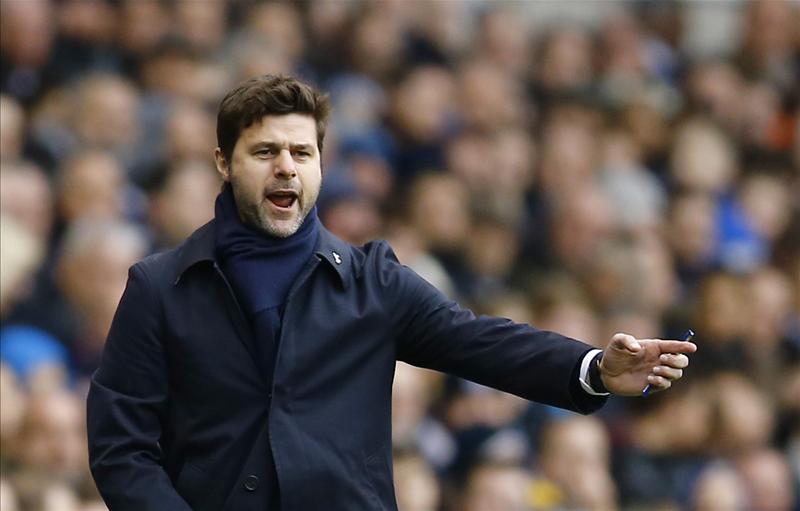
Mauricio Pochettino to Manchester United: The boon, the bane and everything in-between

Mauricio Pochettino’s appointment offers Manchester United the promise of a clear identity and renewed direction, but his success will depend as much on the club’s willingness to provide a stable environment as his ability to deliver trophies.
Mauricio Pochettino has made history as Manchester United’s first-ever non-European manager following confirmation of his appointment as successor to Michael Carrick, whose tenure as permanent head coach ended just three months into the season.
It appears to be a long-overdue appointment for a man who has been linked with the role for more than a decade, ever since his impressive work in transforming Tottenham Hotspur established him as one of Europe’s most exciting tacticians.
However, the years have not been particularly kind to the Argentine when it comes to silverware.
He enjoyed a trophy-laden spell at Paris Saint-Germain, winning Ligue 1, the Coupe de France and the Trophée des Champions, although he missed out on the league title during the second half of his first season after taking over midway through the campaign.
His managerial career, however, is perhaps best characterised by a series of near misses. From coming close to challenging Leicester City’s Premier League title triumph to finishing behind Chelsea the following season and losing the Champions League final to Liverpool, Pochettino has experienced his fair share of disappointment.
He also guided Tottenham to the 2015 League Cup final, where they lost to Chelsea. Led Chelsea to the final in 2024 and lost to Liverpool.
More recently, his United States team suffered defeat to Mexico in the 2025 CONCACAF Gold Cup final, having beaten the same opponents in the 2021 edition.
His appointment at Manchester United has divided opinion, but that is perhaps inevitable given the club’s continued struggles despite several managerial changes since Sir Alex Ferguson’s departure.
Every managerial appointment comes with its advantages and disadvantages. Ultimately, only Pochettino can determine which side of the argument proves more convincing, although the answer will only become clear with time.
Ahead of the start of his reign at Old Trafford, we examine the boon, the bane and everything in-between that could define his Manchester United tenure.
The boon: Proven quality and a clear identity
Mauricio Pochettino is Manchester United’s first managerial appointment with Premier League experience since Jose Mourinho in 2016. This will come in handy at some point.
And perhaps one of the reasons behind club’s struggles under Michael Carrick was the absence of a clearly established identity.
When Rúben Amorim was criticised for his insistence on a back-three system, Carrick arrived and reverted to a conventional back four, while also giving opportunities to players who had been starved of minutes under his predecessor.
Kobbie Mainoo is an important example. The youngster was influential under Erik ten Hag and managed to rediscover that importance under Carrick, who provided him with a platform that had largely been denied during Amorim’s tenure.
Results improved almost immediately. However, as the initial momentum faded, the team’s limitations became more apparent, and Carrick, whose experience at the highest level of management was limited, struggled to find the answers through tactical adjustments.
This shortcoming was further highlighted in games where Manchester United have a man advantage and need to alter their approach to better capitalize, but in tactics, Carrick was found wanting.
This is where Pochettino could offer United something different.
At Tottenham, he transformed the club into one of the Premier League’s most formidable sides, taking them from outside the established title conversation to genuine contenders. His in-game management was also key.
His subsequent appointments at PSG and Chelsea further demonstrated the reputation he had built as a coach capable of managing elite clubs and high-profile players.
His most recent club experience at Chelsea was also encouraging in certain respects. Although he lasted only one season, the team’s strong finish to the 2023/24 campaign suggested that progress was being made.
However, disagreements over the club’s direction and his relationship with the sporting hierarchy ultimately contributed to his departure.
Pochettino has managed some of the biggest names in football, and his experience of working with elite players could prove valuable in a Manchester United dressing room that has struggled to consistently deliver on its potential.
Player management, however, will be just as important as tactical expertise. At Tottenham, his demanding methods reportedly contributed to tensions with some senior players towards the end of his tenure.
Yet his subsequent experiences at PSG and Chelsea may have given him a better understanding of how to manage different personalities and expectations.
Tactically, Pochettino shares some similarities with Carrick, particularly in his preference for attacking football and structured possession. However, their approaches differ considerably, especially when it comes to pressing intensity, tempo and the urgency with which they seek to regain possession.
The Argentine is comfortable operating with both a 4-3-3 and a 4-2-3-1 formation, placing considerable emphasis on collective pressing and exploiting transitions. His Tottenham side were particularly dangerous when Son Heung-min, Dele Alli and Christian Eriksen combined with Harry Kane to attack spaces behind opposing defences.
At United, that approach could make the pace of Bryan Mbeumo and Matheus Cunha particularly valuable. Rather than relying exclusively on elaborate build-up play, Pochettino could encourage quicker forward movements and more aggressive runs beyond the opposition’s defensive line.
The bane: The trophy question and managing expectations
Manchester United’s immediate priority under Pochettino should be rebuilding the team. Any expectation that he must deliver a Premier League title before the expiration of his contract in 2029 would be unrealistic.
It does not help that the Argentine has a relatively modest trophy record compared with some of the managers who have occupied the Old Trafford dugout.
His history of finishing second in major competitions could frustrate supporters, particularly if United begin to look capable of challenging for honours without ultimately winning them.
The current state of English football could also make patience difficult. With several clubs competing for the same prizes, supporters may feel that opportunities are there to be seized. That could make it harder to appreciate progress that does not immediately translate into trophies.
Pochettino’s appointment does not necessarily make Manchester United favourites to win the Premier League in the coming years. Realistically, however, it is difficult to argue that any available manager could guarantee such an outcome given the club’s current position.
Another concern is Pochettino’s relationship with club hierarchies. He is a manager with strong principles and has previously shown little hesitation in expressing dissatisfaction when the direction of a club conflicts with his expectations.
His departure from Chelsea followed disagreements over the club’s sporting direction, while Rúben Amorim also expressed frustration with Manchester United’s hierarchy before leaving, particularly over the scope of his responsibilities.
If similar disagreements emerge under Pochettino, the appointment could quickly become another difficult chapter in United’s managerial history.
Everything in-between: Is United the right environment for Pochettino?
Perhaps the most important question surrounding this appointment has less to do with Pochettino’s coaching ability and more to do with Manchester United’s capacity to provide the conditions necessary for him to succeed.
Since Ferguson’s retirement in 2013, United have appointed David Moyes, Louis van Gaal, José Mourinho, Ole Gunnar Solskjær, Erik ten Hag, Rúben Amorim and Michael Carrick before turning to Pochettino.
That makes eight permanent managerial appointments in just over 13 years, including the Argentine.
The list features managers with vastly different footballing philosophies, personalities and achievements. Some arrived as established winners, others as promising coaches, while Solskjær and Carrick had strong emotional connections with the club.
The fact that none has managed to recreate Ferguson’s sustained success raises an uncomfortable possibility: perhaps the problem has never been exclusively about finding the right manager.
United’s recruitment strategy, executive decision-making, squad planning and changing footballing structures have all come under scrutiny during the post-Ferguson period.
Pochettino must therefore avoid becoming another manager whose authority is gradually undermined by disagreements over recruitment, player management and the club’s broader direction.
His Chelsea experience should serve as a warning.To stand a chance of succeeding at Old Trafford, he needs clarity over his responsibilities, a productive relationship with the sporting department and sufficient backing to build a team capable of executing his ideas.
Equally, United must recognise that rebuilding cannot be achieved through another expensive collection of players recruited without a coherent plan.
There is also the question of whether his tactical demands suit the squad he inherits. Pochettino traditionally favours energetic attackers, mobile midfielders, aggressive full-backs and defenders comfortable operating in relatively advanced positions.
He should also have sufficient influence over decisions concerning which players stay and which leave, particularly given that few members of the current squad should be considered untouchable.
Pochettino’s preferred approach requires exceptional physical commitment. His teams must press collectively, recover quickly and maintain their intensity throughout matches. This could present a challenge for several United players who have struggled with the physical demands of a more aggressive approach.
A historic appointment and an opportunity for redemption
Mauricio Pochettino becomes the first South American manager in Manchester United’s history, taking charge of a club where the opportunity to win the Premier League remains one of the biggest attractions of the job.
Having spent several years at Tottenham and a season at Chelsea, the Argentine already possesses considerable experience of English football. He will hope to use that knowledge to write a different story at Old Trafford, one that finally delivers the major domestic honour that has eluded him.
But patience will be essential.United cannot reasonably expect Pochettino to transform a struggling squad overnight, just as the Argentine must understand that the privilege of managing one of football’s biggest institutions comes with enormous expectations.
The ingredients for a successful partnership are there. Whether they finally translate into something meaningful will depend on more than the man in the dugout.
After all, Manchester United do not just need another good manager. They also need to become a club capable of allowing managers to succeed.




One Comment